Advanced Negotiation Skills for Experienced Professionals

Negotiation is no longer just a transactional skill reserved for salespeople or legal experts; it has become a critical competency for leaders, executives, and seasoned professionals navigating complex business landscapes. As markets evolve and stakes rise, the ability to negotiate at a high level directly impacts organizational success and personal career growth. Experienced professionals must deepen their negotiation acumen beyond basic tactics to master nuanced psychological strategies and adaptive frameworks.
In today’s interconnected, high-pressure environment, advanced negotiation skills empower professionals to unlock value, manage conflicts, and build sustainable partnerships. This article explores sophisticated negotiation theories, real-world applications, and actionable exercises designed to elevate your negotiation outcomes. Whether you lead multi-million dollar deals or influence cross-functional teams, these insights will sharpen your strategic influence and decision-making.
By reading this comprehensive guide, you will discover how to leverage psychological principles like anchoring and mirroring, develop your BATNA with precision, and apply integrative negotiation techniques that foster collaboration over competition. You will also find expert guidance on handling difficult counterparts, managing cultural differences, and practicing high-impact communication to drive mutually beneficial results.
· Table of Contents
· The Psychology Behind Advanced Negotiation
· Mastering BATNA and Reservation Price Strategies
· Strategic Use of Anchoring and Framing Techniques
· Leveraging Emotional Intelligence and Active Listening
· Complex Negotiation Scenarios: Multi-Party and Cross-Cultural
· Practical Exercises to Build Advanced Negotiation Competencies
· Frequently Asked Questions
· Conclusion
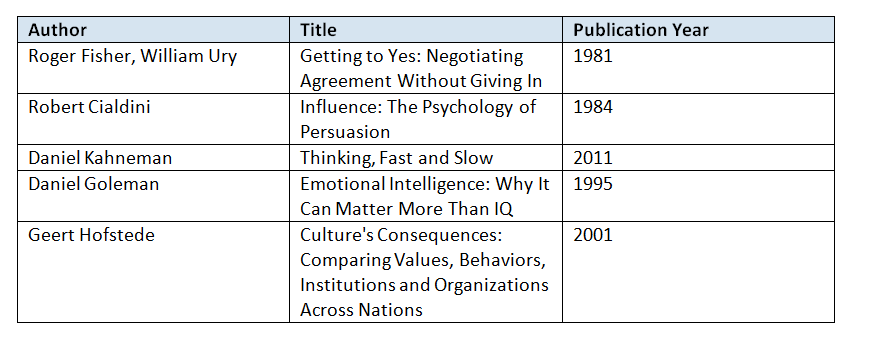
· References
The Psychology Behind Advanced Negotiation
Understanding the psychological underpinnings of negotiation is essential for professionals seeking to move beyond scripted tactics. Advanced negotiation requires awareness of cognitive biases, emotional drivers, and behavioral patterns that influence decision-making on both sides of the table.
One foundational concept is the Dual Process Theory, which posits that humans operate using two cognitive systems: System 1 (fast, intuitive) and System 2 (slow, analytical). Skilled negotiators recognize when counterparts rely on heuristics or emotions and strategically engage System 2 processing to encourage rational decision-making. For example, when a counterpart reacts impulsively to an offer, a negotiator might pause the discussion to prompt reflection, reducing the influence of snap judgments.
Another critical psychological tool is the principle of reciprocity, identified by Robert Cialdini in his seminal work on influence. Negotiators can initiate small concessions or demonstrate vulnerability early to trigger reciprocal cooperation. This tactic fosters trust and primes the counterpart for collaborative problem-solving.
Psychological frameworks such as Prospect Theory also reveal why negotiators sometimes irrationally reject fair deals due to loss aversion. Recognizing this tendency allows advanced negotiators to reframe proposals in terms of gains rather than losses, enhancing acceptability.
Practical Exercise: Cognitive Bias Identification
· Review recent negotiations and identify at least two cognitive biases (e.g., anchoring, confirmation bias) that influenced outcomes.
· Write a brief analysis of how awareness of these biases might have altered your approach.
· Role-play with a peer to practice redirecting conversations from emotional reactions to rational evaluation.
Mastering BATNA and Reservation Price Strategies
The concept of BATNA (Best Alternative to a Negotiated Agreement), introduced by Fisher and Ury in "Getting to Yes," remains central to advanced negotiation. However, experienced professionals must refine BATNA development beyond simple alternatives to dynamic, scenario-based planning.
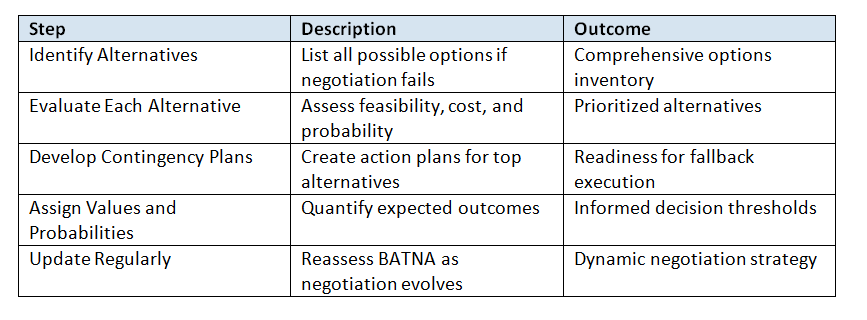
An effective BATNA is not static; it evolves with market conditions, organizational priorities, and new information. Advanced negotiators create layered BATNAs, assigning probabilities and values to multiple fallback options. This probabilistic approach enables better risk assessment and flexibility.
Determining your reservation price—the minimum acceptable outcome—requires integrating BATNA analysis with a thorough understanding of counterpart motivations and constraints. Avoid the common pitfall of setting reservation prices purely on internal needs; instead, consider external signals, industry benchmarks, and cultural norms.
Table: BATNA Development Framework
Strategic Use of Anchoring and Framing Techniques
Anchoring, a cognitive bias where initial information sets the tone for all subsequent judgments, is a powerful lever in negotiation. Experts use anchoring deliberately by setting initial offers or demands that skew expectations favorably without alienating counterparts.
Effective anchors are realistic yet ambitious, grounded in data and market intelligence. Overly aggressive anchors may backfire by triggering rejection or damaging relationships. Framing—the manner in which information is presented—works hand-in-hand with anchoring to shape perception.
For instance, framing a price increase as a necessary investment in quality rather than a cost hike taps into positive associations and reduces resistance. Framing also involves highlighting shared goals or mutual gains to shift adversarial mindsets toward collaboration.
Practical Exercise: Anchoring and Framing Role Play
· Prepare two contrasting opening offers for a hypothetical negotiation: one anchored high and one moderate.
· Develop framing narratives for both offers emphasizing different value propositions.
· Practice delivering these offers with a partner, observing reactions and adjusting framing accordingly.
Leveraging Emotional Intelligence and Active Listening
Emotional intelligence (EI) — the ability to recognize, understand, and manage emotions — is indispensable in high-level negotiations. EI enables negotiators to detect underlying interests, de-escalate tensions, and foster trust.
Active listening, a core EI skill, involves fully concentrating on the speaker, understanding their message, responding thoughtfully, and remembering key points. This approach signals respect and can reveal hidden concerns or priorities.
The psychological concept of the "emotional bank account," coined by Stephen Covey, reflects how consistent positive interactions build relational reserves that can be drawn upon during conflict or deadlock.
Key EI Tactics for Negotiators
· Label emotions explicitly (“It sounds like you’re concerned about delivery times.”)
· Use empathy statements to validate feelings without agreeing (“I understand this is a challenging situation.”)
· Manage your own emotional responses to stay composed and clear-headed
· Observe nonverbal cues including tone, facial expressions, and posture
Complex Negotiation Scenarios: Multi-Party and Cross-Cultural
Advanced professionals often face negotiations involving multiple stakeholders or across cultures, exponentially increasing complexity. Multi-party negotiations require coalition-building, agenda-setting, and multi-dimensional tradeoffs.
Cross-cultural negotiations introduce divergent communication styles, decision-making norms, and varying perceptions of time and authority. The Hofstede cultural dimensions model offers insights into how power distance, individualism, uncertainty avoidance, and other factors influence negotiation behavior.
Effective negotiators conduct thorough stakeholder mapping to identify interests, alliances, and potential conflicts. They also invest time in cultural intelligence to adapt language, formality, and negotiation pace.
Practical Exercise: Multi-Party Negotiation Simulation
· Assemble a group with distinct roles and interests
· Define negotiation goals and potential conflicts
· Practice coalition building and consensus seeking
· Debrief to identify challenges and strategies used
Practical Exercises to Build Advanced Negotiation Competencies
Mastery requires deliberate practice. Below are targeted exercises designed to enhance your negotiation effectiveness:
· Role-Playing Complex Scenarios — Engage with peers or coaches to simulate high-pressure, multi-issue negotiations incorporating psychological tactics.
· BATNA Refinement Workshops — Regularly update and stress-test your alternatives in varied contexts.
· Reflection Journals — After each negotiation, document emotional reactions, decision points, and lessons learned to build self-awareness.
· Video Analysis — Record practice negotiations to analyze body language, tone, and effectiveness of anchoring/framing.
· Mindfulness Training — Develop emotional regulation skills to maintain composure and clarity during tense negotiations.
Frequently Asked Questions
How can experienced negotiators avoid overconfidence bias?
Overconfidence bias can lead to underestimating risks or counterpart resistance. Experienced negotiators should seek objective feedback, engage devil’s advocates, and employ probabilistic thinking to challenge assumptions. Regular BATNA updates and scenario planning also mitigate overconfidence by revealing vulnerabilities.
What is the best way to handle a counterpart who uses aggressive tactics?
Maintaining composure is paramount. Use calibrated questions to redirect aggression (“Can you help me understand your concerns?”), employ active listening to validate emotions without conceding, and set clear boundaries. Preparing walk-away alternatives ensures you do not feel pressured into unfavorable terms.
How important is body language in advanced negotiation?
Extremely important. Nonverbal cues convey trustworthiness, confidence, and openness. Mirroring and maintaining appropriate eye contact build rapport, while recognizing counterpart discomfort helps adjust strategy. However, body language should be congruent with verbal messages to avoid mixed signals.
Can technology support advanced negotiation training?
Yes. Virtual negotiation platforms allow safe practice of complex scenarios with real-time feedback. AI-driven simulations can analyze language patterns and emotional tone, providing insights for improvement. Video recording and analysis tools also enhance self-awareness.
How do cultural differences affect negotiation deadlines?
Cultural attitudes toward time vary widely. Some cultures prioritize punctuality and quick decisions (e.g., U.S., Germany), while others emphasize relationship-building and flexible timelines (e.g., many Latin American and Middle Eastern countries). Understanding these differences prevents misinterpretation of delays and frustration.
Conclusion
Advanced negotiation skills distinguish experienced professionals by enabling them to navigate complexity, harness psychological dynamics, and craft creative agreements that maximize value for all parties. Integrating frameworks like BATNA, anchoring, and emotional intelligence equips negotiators to influence outcomes strategically while preserving relationships.
Continued deliberate practice, cultural awareness, and self-reflection are essential for sustained mastery. By applying the expert insights and exercises outlined here, you position yourself as a formidable negotiator capable of steering critical deals and collaborations to success.
Take the next step in your professional growth: commit to honing these advanced negotiation skills through targeted training, peer engagement, and real-world application. Your ability to negotiate effectively will drive not only your career but also your organization’s competitive advantage.