B2B Negotiation Case Studies: Lessons from Real Deals

In today’s hyper-competitive B2B marketplace, negotiation is no longer just a skill — it’s a science and an art that directly impacts enterprise profitability and partnership longevity. Imagine a scenario where a Fortune 500 procurement leader is locked in a multi-month negotiation with a strategic supplier. The stakes are high: millions of dollars in annual spend, complex contract terms, and potential for long-term innovation collaboration. The slightest misstep could cost the company tens of millions or damage its supply chain resilience.
This dynamic isn’t unique. Across industries, B2B sales and procurement teams face intricate negotiations involving multiple stakeholders, tight budgets, and evolving market conditions. Understanding how to navigate these scenarios with proven frameworks and real-world tactics is essential for sustainable success.
In this comprehensive guide, you will learn from actual B2B negotiation case studies that illustrate how top-performing companies apply negotiation theories like BATNA (Best Alternative to a Negotiated Agreement), ZOPA (Zone of Possible Agreement), and anchoring, combined with psychological principles and strategic communication. We will break down these deals, share scripts and dialogue excerpts, and highlight measurable outcomes to equip you with actionable insights. Whether you’re a sales leader, procurement manager, or negotiation coach, this pillar page will deepen your expertise and prepare you for your next high-stakes negotiation.
· Table of Contents
· Understanding Core Negotiation Frameworks in B2B Deals
· Case Study 1: Leveraging BATNA in a Software Licensing Agreement
· Case Study 2: Anchoring and Value Creation in a Manufacturing Supply Contract
· Case Study 3: Managing Multi-Party Negotiations in a Telecom Partnership
· Case Study 4: Using ZOPA to Resolve Pricing Deadlocks in Professional Services
· Case Study 5: Psychological Tactics and Reciprocity in Enterprise Hardware Sales
· Frequently Asked Questions
· Conclusion
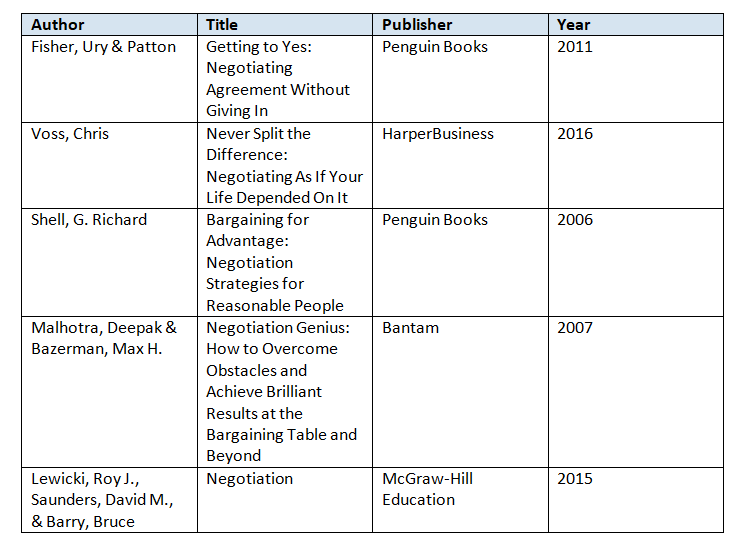
· References
Understanding Core Negotiation Frameworks in B2B Deals
Successful B2B negotiation hinges on mastering foundational frameworks that clarify interests, alternatives, and limits. Two of the most critical concepts are BATNA and ZOPA.
BATNA, or Best Alternative to a Negotiated Agreement, refers to the fallback option if negotiations fail. Knowing your BATNA—and estimating your counterpart’s—strengthens your position and prevents agreement on unfavorable terms. For example, a global logistics firm negotiating a contract with a new freight carrier analyzed its BATNA by evaluating existing carriers’ capabilities and alternative routes, which informed their walk-away price and negotiation flexibility.
ZOPA, the Zone of Possible Agreement, represents the overlap between parties’ minimum acceptable terms. Identifying the ZOPA early through fact-finding and transparent communication helps avoid impasses. In a SaaS renewal negotiation, a client’s maximum budget and the vendor’s minimum price created a clear ZOPA, which both sides used to co-create a mutually beneficial contract.
Anchoring is another powerful tactic where one party sets an initial offer to influence the negotiation range. This psychological principle often determines the negotiation's trajectory. However, anchoring must be used strategically and ethically to maintain long-term relationships.
· Key negotiation frameworks to master:
· BATNA — strengthens alternatives and walk-away power
· ZOPA — defines the deal’s feasible range
· Anchoring — initial offer sets negotiation context
· Reciprocity — leveraging give-and-take dynamics
· Framing — shaping perceptions and priorities
Understanding these frameworks provides a lens through which real B2B negotiation case studies can be analyzed for maximum learning.
Case Study 1: Leveraging BATNA in a Software Licensing Agreement
A leading financial services company was negotiating a multi-year enterprise software licensing agreement with a major vendor. The initial vendor proposals included high fees and rigid terms, threatening budget overruns and limited scalability.
Before entering negotiations, the buyer team invested heavily in BATNA analysis. They identified alternative vendors with comparable products, evaluated internal development options, and quantified the cost and risk of going without new software capabilities.
During the negotiation, the procurement lead used their strong BATNA to push back against unfavorable pricing and contract clauses. They shared selective data about alternative suppliers without revealing their entire strategy, effectively signaling that walking away was viable.
Negotiation Script Excerpt:
Buyer: "We recognize the value your software brings, but based on our comprehensive evaluation, alternatives exist that meet our scalability and budget requirements. To proceed, we need to see more competitive pricing aligned with our forecasts."
Vendor: "We understand. Let’s explore volume discounts and flexible term options to better align with your needs."
Outcome: By clearly understanding and leveraging their BATNA, the buyer secured a 15% price reduction, flexible renewal terms, and a volume discount clause, saving millions over five years.
Lessons:
· Conduct thorough BATNA research before negotiations
· Use BATNA as a credible but non-confrontational leverage point
· Balance firmness with openness to collaborative problem-solving
Case Study 2: Anchoring and Value Creation in a Manufacturing Supply Contract
A multinational manufacturing company negotiated a supply contract for critical components with a new Asian supplier. The supplier’s initial price quote was 20% higher than the incumbent's pricing, risking cost overruns.
The supplier used anchoring by submitting a high initial price to frame the negotiation around quality and reliability, emphasizing just-in-time delivery and superior materials.
The buyer team responded with their own counter-anchor, presenting a detailed cost breakdown and competitive benchmarks to reset expectations.
Negotiation Script Excerpt:
Supplier: "Our pricing reflects premium-grade materials and guaranteed delivery timelines vital for your production lines."
Buyer: "We value quality, but given our volume and long-term partnership potential, we were expecting pricing closer to the industry average. Let’s explore options to align on cost without compromising quality."
This anchoring exchange led to joint value creation discussions, including process improvements, shared inventory management, and flexible payment terms.
Outcome: The parties agreed on a price 10% above incumbent but incorporated value-added services that reduced total cost of ownership by 12%.
Lessons:
· Expect and prepare for anchoring tactics from counterparts
· Use data-driven counter-anchors to reset negotiation frames
· Pursue value creation beyond price to improve deal economics
Case Study 3: Managing Multi-Party Negotiations in a Telecom Partnership
A telecom operator sought a strategic partnership with two technology providers to co-develop 5G infrastructure. Negotiations involved multiple parties with differing priorities, including revenue sharing, IP rights, and timelines.
The negotiation team applied the “Interest-Based Relational (IBR) Approach,” focusing on separating people from problems and fostering collaboration.
Key tactics included:
· Joint fact-finding workshops to build shared understanding
· Setting clear agenda and decision rules upfront
· Using a neutral facilitator to manage conflicts
Dialogue Example:
Operator: "Let’s focus on our shared goals of rapid deployment and maximizing market reach rather than fixed revenue splits initially."
Tech Provider A: "Agreed, aligning on timelines and responsibilities first will set a good foundation."
Tech Provider B: "We propose a phased approach to IP sharing aligned with development milestones."
Outcome: The multi-party negotiation concluded in four months with a flexible partnership agreement that allowed iterative adjustments and joint governance.
Lessons:
· Use facilitation and process management in complex multi-party deals
· Align on shared interests before negotiating detailed terms
· Build governance structures that accommodate evolving partnerships
Case Study 4: Using ZOPA to Resolve Pricing Deadlocks in Professional Services
A global consulting firm faced a deadlock with a major client over the price of a multi-year digital transformation project. The client demanded a fixed-price contract to control costs; the consulting firm preferred time-and-materials billing due to project uncertainty.
Both parties were entrenched, risking deal collapse.
The negotiation lead employed ZOPA analysis by mapping client budget constraints against the consulting firm’s minimum acceptable revenue.
They identified a hybrid pricing model within the ZOPA that included fixed fees for defined milestones and variable fees for scope changes.
Negotiation Script Excerpt:
Consultant: "To address your cost certainty concerns while managing project risks, we propose fixed pricing for initial phases and a flexible model for subsequent work. This balances predictability with adaptability."
Client: "That approach reduces our exposure and provides clarity on deliverables. Let’s detail the milestones."
Outcome: The hybrid model resolved the deadlock, enabling project kickoff and establishing a framework for future engagements.
Lessons:
· Map out ZOPA clearly to identify negotiation possibilities
· Use creative pricing and contract structures to bridge gaps
· Employ transparent communication to build trust and reduce deadlock risks
Case Study 5: Psychological Tactics and Reciprocity in Enterprise Hardware Sales
An enterprise hardware vendor negotiating with a large healthcare provider used reciprocity principle to build goodwill. Early in talks, the vendor offered a free pilot program and extended support without immediate cost.
This gesture created a sense of obligation, increasing the buyer’s willingness to consider premium options later.
The vendor also used calibrated questions (as per Chris Voss’s “Never Split the Difference” framework) to uncover the buyer’s hidden objections and priorities.
Dialogue Example:
Vendor: "What’s the most critical factor for your IT team when evaluating new hardware?"
Buyer: "Reliability and integration with existing systems."
Vendor: "How would improved integration impact your operational efficiency?"
Outcome: The vendor closed a $10 million deal with upsell options, attributing success to psychological rapport and data-driven conversation.
Lessons:
· Leverage reciprocity to build positive negotiation dynamics
· Use calibrated questions to gather intelligence and guide talks
· Combine psychology with data to close complex enterprise deals
Frequently Asked Questions
Q1: How can I effectively prepare my BATNA for complex B2B negotiations?
A1: Effective BATNA preparation involves comprehensive market research, evaluating alternative suppliers or solutions, understanding internal fallback options, and quantifying the financial and strategic implications of walking away. Engage cross-functional teams to gather diverse insights. Document BATNA scenarios and rehearse negotiation scripts that incorporate BATNA leverage without revealing your full hand.
Q2: What role does anchoring play in price negotiations, and how do I counter it?
A2: Anchoring sets the initial price or terms to influence the negotiation range. To counter anchoring, prepare your own data-driven anchors, challenge unrealistic initial offers politely, and reframe the discussion around objective criteria (e.g., market benchmarks, cost breakdowns). Avoid immediate reactions; take time to analyze anchors before responding.
Q3: How do I manage multi-party negotiations with conflicting interests?
A3: Multi-party negotiations require structured processes: establish clear agendas, roles, and decision-making protocols. Use neutral facilitators to mediate discussions. Focus on shared goals and interests rather than positions. Employ collaborative frameworks like the Interest-Based Relational (IBR) approach to foster trust and alignment.
Q4: When is it appropriate to introduce hybrid pricing models in B2B deals?
A4: Hybrid pricing models are effective when project scope or outcomes are uncertain but cost predictability is important to the buyer. They allow flexibility by combining fixed fees for defined deliverables with variable fees for changes or additional work. Introduce these models after identifying client concerns and within the ZOPA to ensure alignment.
Q5: What psychological principles can enhance negotiation outcomes in enterprise sales?
A5: Key psychological principles include reciprocity (offering value to encourage concessions), framing (shaping how options are perceived), social proof (demonstrating reference clients or case studies), and calibrated questioning (eliciting information and guiding dialogue). These principles build rapport, uncover hidden needs, and increase the likelihood of agreement.
Conclusion
B2B negotiation is a multifaceted discipline requiring strategic preparation, mastery of core frameworks, and adaptive communication skills. The case studies presented illustrate how applying BATNA, ZOPA, anchoring, and psychological tactics in real-world scenarios leads to measurable improvements in deal terms, relationship value, and long-term partnership success.
As you prepare for your next enterprise negotiation, remember to combine data-driven analysis with human-centric dialogue. Use the lessons and scripts here to sharpen your approach, anticipate challenges, and create value beyond price. Negotiation is not a zero-sum game but an opportunity to build mutual gains and strategic advantage.
Take action today by reviewing your current negotiation playbooks and integrating these proven techniques. Elevate your negotiation outcomes and drive sustainable growth for your organization.