B2B Negotiation Checklist: A Complete Guide

In today’s hyper-competitive B2B landscape, negotiation is not just a skill—it’s a decisive factor that can make or break multi-million dollar deals. Imagine a scenario where a procurement leader at a Fortune 500 company is evaluating vendor proposals for a critical supply chain solution. The stakes are high: a misstep in negotiation could lead to unfavorable contract terms, eroding margins and damaging long-term partnerships. Conversely, a well-executed negotiation strategy can unlock value, mitigate risks, and set the stage for a mutually beneficial relationship.
This guide is designed for sales leaders, procurement professionals, and dealmakers who want to master the art and science of B2B negotiations. We’ll dissect the essential components of a negotiation checklist tailored for complex enterprise deals. From preparation and strategy formulation to execution and post-negotiation assessment, you’ll gain actionable insights grounded in proven frameworks like BATNA (Best Alternative to a Negotiated Agreement), ZOPA (Zone of Possible Agreement), and anchoring techniques. By the end, you will possess a comprehensive toolkit to approach any B2B negotiation with confidence and precision.
· Table of Contents
· Preparation: Research & Goal Setting
· Understanding Negotiation Frameworks
· Strategy Development & Positioning
· Communication & Negotiation Tactics
· Handling Objections & Deadlocks
· Closing the Deal & Agreement Finalization
· Post-Negotiation Review & Relationship Management
· Frequently Asked Questions
· Conclusion
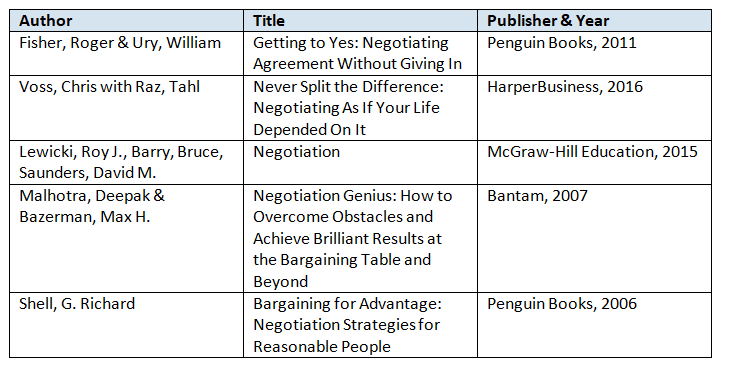
· References
Preparation: Research & Goal Setting
Preparation is the foundation of successful B2B negotiations. Without thorough research and clear objectives, you risk entering discussions unarmed with critical insights.
Start by gathering comprehensive intelligence on the counterparty: their business model, financial health, past negotiation patterns, and decision-makers involved. For example, a SaaS vendor negotiating with a retail conglomerate should understand the buyer’s existing technology stack, budget cycles, and pain points such as scalability or integration issues.
Next, define your negotiation goals with specificity. This includes not only the ideal pricing and contract terms but also non-monetary objectives such as service level agreements (SLAs), exclusivity clauses, or support commitments. Employ the SMART goal framework—ensure goals are Specific, Measurable, Achievable, Relevant, and Time-bound—to maintain focus.
Identify your BATNA—the best alternative if the negotiation fails. For instance, if a manufacturing supplier cannot meet cost targets, knowing alternate vendors or internal production options empowers you to negotiate from a position of strength. Similarly, estimate the other party’s BATNA to anticipate their walk-away points and leverage zones.
· Key preparation actions:
· Conduct stakeholder and competitor analysis
· Define SMART negotiation objectives
· Map decision-makers and influencers
· Calculate your BATNA and estimate theirs
· Prepare a negotiation dossier summarizing all data
Real-World Example: Cisco Systems’ Multi-Party Preparation
Cisco’s procurement teams routinely prepare for negotiations involving multiple suppliers. They assemble cross-functional teams to analyze vendor capabilities and risk profiles. By aligning internal stakeholders on objectives and fallback positions, Cisco ensures cohesive negotiation strategies that prevent internal conflicts and drive better outcomes.
Understanding Negotiation Frameworks
A solid grasp of negotiation frameworks enables you to analyze and structure discussions methodically. Two pivotal concepts in B2B negotiations are BATNA and ZOPA.
BATNA, coined by Fisher and Ury in "Getting to Yes," represents your fallback option if talks collapse. Knowing your BATNA boosts confidence and helps avoid accepting suboptimal deals. For example, a logistics company negotiating transportation contracts must know if alternative carriers or in-house options exist as viable BATNAs.
ZOPA, or Zone of Possible Agreement, defines the range between the seller’s minimum acceptable price and the buyer’s maximum willingness to pay. Identifying the ZOPA allows negotiators to pinpoint where deal terms can be mutually acceptable. If the buyer’s top price is below the seller’s bottom line, no deal is feasible without concessions.
Anchoring is a psychological technique where the first offer sets a reference point that biases subsequent negotiation. Proper use of anchoring can steer negotiations favorably. For example, a vendor opening with a higher-than-expected price can anchor the buyer’s expectations upward, creating room for downward concessions while maintaining profitability.
· Essential frameworks every negotiator must master:
· BATNA – Best Alternative to a Negotiated Agreement
· ZOPA – Zone of Possible Agreement
· Anchoring and Adjustment Heuristic
· Interest-Based Negotiation (Fisher & Ury)
· Integrative vs. Distributive Negotiation
Anchoring Script Example
Vendor: “Our standard package for this enterprise solution is priced at $1.2 million annually, including full support and customization.”
Buyer: “That’s higher than our budget.”
Vendor: “We can explore options to adjust scope or payment terms, but this price reflects the value delivered.”
This opening anchors the negotiation around $1.2 million, allowing the vendor to negotiate concessions from a favorable starting point.
Strategy Development & Positioning
Once prepared and familiar with frameworks, develop a negotiation strategy tailored to your business goals and counterpart’s profile.
Start by identifying whether the negotiation is primarily distributive (win-lose) or integrative (win-win). Complex B2B deals often combine both — price and terms (distributive) plus collaborative partnership elements (integrative).
Consider employing the “Dual Concern Model” which balances concern for your own outcomes with concern for the relationship. A high concern for both leads to collaborative strategies, ideal for long-term partnerships. Conversely, a competitive approach suits one-off or commoditized deals.
Define your opening offer and reservation point (lowest acceptable outcome). Use data-driven market benchmarks and internal cost analyses to justify your positioning.
· Strategic considerations:
· Distributive vs. integrative negotiation approach
· Relationship importance and longevity
· Timing and pacing of offers and concessions
· Use of concessions strategy (planned trade-offs)
· Creating value through bundling or trade-offs
Example: IBM’s Value-Based Positioning
IBM negotiates large IT contracts by emphasizing value — not just price. They bundle software licenses, implementation services, and ongoing support, creating a package that addresses client pain points holistically. This integrative approach allows IBM to justify premium pricing while fostering partnerships.
Communication & Negotiation Tactics
Effective communication is the linchpin of negotiation success. This involves active listening, framing, questioning, and managing emotions.
Use open-ended questions to uncover the other party’s underlying interests and constraints. For instance, “Can you share what challenges you foresee with the current proposal?” invites dialogue beyond surface objections.
Leverage mirroring and labeling techniques from the tactical empathy framework by Chris Voss. Mirroring repeats the last few words spoken to encourage elaboration; labeling names emotions to validate concerns, e.g., “It seems like meeting your delivery timeline is critical.”
Maintain control of the agenda by summarizing progress and confirming mutual understanding periodically.
· Key negotiation tactics:
· Active listening and tactical empathy
· Questioning to reveal interests and constraints
· Anchoring and framing offers strategically
· Silence to prompt concessions
· Use of deadlines and scarcity to create urgency
Negotiation Dialogue Script: Handling a Price Objection
Buyer: “Your price is above our budget.”
Seller: “I understand budget constraints. Can you help me understand which aspects are most sensitive for you?”
Buyer: “Mainly the upfront licensing fees.”
Seller: “It sounds like spreading payments might ease the pressure. Would a phased payment plan help?”
This script uses empathy and questioning to identify concerns and propose solutions without immediate price cuts.
Handling Objections & Deadlocks
Objections are inevitable in B2B negotiations, as parties protect their interests and test boundaries. The key is to anticipate objections, respond constructively, and use deadlocks as opportunities for creative problem-solving.
Classify objections into categories: price, scope, timing, authority, or risk. Tailor responses accordingly. For example, if scope creep is a concern, propose clear change control processes.
If negotiations stall, apply the “Breakthrough Negotiation” principle by shifting focus from positions to interests. Facilitate joint problem-solving sessions or introduce third-party mediators.
Avoid escalation traps or emotional reactions that can derail talks. Maintain professionalism and focus on objective criteria to reframe disputes.
· Best practices for overcoming deadlocks:
· Use objective standards (industry benchmarks, ROI data)
· Revisit BATNA to reinforce fallback options
· Explore alternative deal structures (e.g., trial periods)
· Engage neutral facilitators or executive sponsors
· Take breaks to reset emotions and perspectives
Case Study: GE’s Negotiation Turnaround
During a deadlock with a key supplier over delivery timelines, GE’s procurement team brought in a cross-functional task force to brainstorm alternatives. They proposed a pilot delivery phase with incentives for early completion, breaking the stalemate and preserving the partnership.
Closing the Deal & Agreement Finalization
Closing is often underestimated but critical to secure commitments and avoid post-negotiation disputes.
Confirm all agreed terms clearly and document them meticulously. Use a checklist that covers pricing, payment schedules, deliverables, SLAs, penalties, and exit clauses.
Apply the “Assumptive Close” technique by summarizing next steps as if the deal is concluded: “Based on our discussion, we will prepare the contract reflecting these terms and aim for a signature by next Friday.”
Prepare for contract reviews with legal teams to ensure compliance and risk mitigation.
· Closing checklist essentials:
· Recap all negotiated terms in writing
· Obtain verbal confirmation from all stakeholders
· Align legal and compliance reviews early
· Define implementation and onboarding timelines
· Schedule post-signature check-ins
Closing Script Example
Seller: “We’ve agreed on a 3-year term with phased payments and enhanced support. I will draft the contract and share it by Tuesday. Does that timeline work for you?”
Buyer: “Yes, that works. Looking forward to reviewing the contract.”
Seller: “Great. I’ll follow up with your legal team to address any questions.”
Post-Negotiation Review & Relationship Management
Negotiation doesn’t end at signature. Continuous relationship management ensures deal success and sets the stage for future negotiations.
Conduct a post-mortem analysis with your team to review what worked and what didn’t. Use metrics such as deal cycle time, concession ratios, and post-deal satisfaction scores.
Maintain communication with the client or supplier to monitor performance against contract terms. Early issue detection and resolution reduce risks and reinforce trust.
Plan for regular business reviews and explore opportunities for upselling or contract renewals, turning negotiation into an ongoing strategic process.
· Post-negotiation best practices:
· Internal debrief and lessons learned documentation
· Track key performance indicators (KPIs) tied to the deal
· Establish client/supplier success touchpoints
· Proactively manage contract renewals and expansions
· Leverage CRM tools to maintain relationship continuity
Example: Salesforce’s Account Management Model
Salesforce integrates negotiation outcomes into its account management workflows. Dedicated Customer Success Managers track contract compliance and customer satisfaction, facilitating smooth renewals and cross-selling opportunities.
Frequently Asked Questions
Q1: What is the most important step in a B2B negotiation checklist?
A1: Preparation tops the list. Thorough research, clear goal setting, and understanding your BATNA equip you with the insights needed to negotiate confidently and strategically rather than reactively.
Q2: How do I determine the other party’s BATNA?
A2: Analyze the market landscape, competitor alternatives, and the counterparty’s business pressures. Engage in information-gathering conversations, and look for signals in their offers or concessions that reveal fallback options.
Q3: When should I use integrative negotiation tactics in B2B deals?
A3: Integrative tactics are ideal when the relationship is long-term or when value can be created beyond price—such as through joint innovation, bundled services, or shared risk management.
Q4: How can I handle a negotiation deadlock effectively?
A4: Shift focus from positions to interests, propose alternative deal structures, or bring in neutral mediators. Pausing to reassess internal positions and BATNA can also provide fresh perspectives.
Q5: What metrics should I track to evaluate negotiation success?
A5: Track metrics like time-to-close, percentage of target price achieved, concession depth, contract compliance rates, and post-deal customer satisfaction to measure both efficiency and effectiveness.
Conclusion
Mastering B2B negotiations requires a structured approach grounded in preparation, strategy, and communication. By leveraging frameworks like BATNA and ZOPA, employing proven tactics such as anchoring and tactical empathy, and maintaining rigorous post-negotiation practices, professionals can maximize deal value and foster lasting partnerships. The comprehensive checklist outlined here serves as your roadmap to navigating complex enterprise negotiations with confidence and precision.
Start integrating these strategies into your next negotiation to transform your deal outcomes. For tailored negotiation training and advanced strategic support, connect with our expert consultants and elevate your enterprise sales performance today.