B2B Sales Negotiation Techniques That Work

In today’s hyper-competitive B2B marketplace, sales professionals face increasingly sophisticated buyers armed with detailed information and high expectations. Imagine a scenario where a sales director at a technology firm is negotiating a multimillion-dollar contract with a global manufacturing client. Both parties stand to gain significantly, but the negotiation is tense, with pricing, delivery timelines, and service levels all on the table. The outcome will either set the stage for a profitable partnership or lead to a costly lost opportunity.
Successful negotiation in such high-stakes B2B environments requires more than just charisma or persistence. It demands a strategic blend of preparation, psychological insight, and proven frameworks that enable sellers to create value, manage objections, and secure favorable terms without damaging long-term relationships. This is especially crucial as procurement teams become more data-driven, and decision-making processes grow more complex.
This comprehensive guide will equip you with actionable B2B sales negotiation techniques grounded in real-world enterprise scenarios. You will learn how to leverage concepts like BATNA (Best Alternative to a Negotiated Agreement), ZOPA (Zone of Possible Agreement), anchoring, and more. Additionally, we will explore tactical scripts, negotiation psychology, and metrics to measure success, empowering you to consistently close deals that maximize value for both parties.
· Table of Contents
· Understanding the Foundations of B2B Sales Negotiation
· Preparing with Data-Driven Intelligence and BATNA Analysis
· Leveraging Psychological Principles and Framing Techniques
· Tactics for Anchoring, Concessions, and Creating Win-Win Outcomes
· Negotiation Scripts and Role-Playing for Enterprise Deals
· Measuring Success: Key Metrics and Post-Negotiation Review
· Frequently Asked Questions
· Conclusion and Next Steps
· References
Understanding the Foundations of B2B Sales Negotiation
Negotiation in B2B sales differs fundamentally from B2C due to the scale, complexity, and multiple stakeholders involved. At its core, B2B negotiation is a collaborative problem-solving process aimed at reaching an agreement that aligns with the strategic objectives of both buyer and seller.
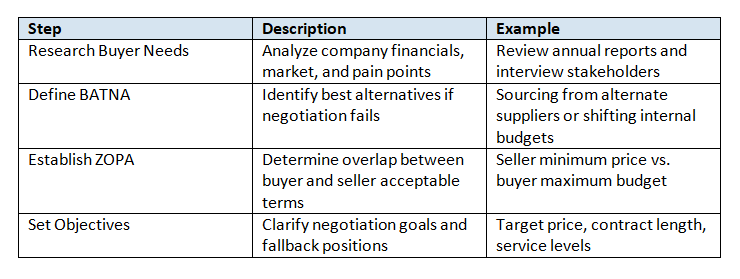
One foundational concept is the Zone of Possible Agreement (ZOPA), which represents the range between the seller’s minimum acceptable terms and the buyer’s maximum offer. Understanding ZOPA helps negotiators identify when a deal is feasible and when to walk away. Another critical element is BATNA, or Best Alternative to a Negotiated Agreement—a fallback option if negotiations fail. Knowing your BATNA strengthens your negotiating position by providing clarity on when to accept a deal or pursue alternatives.
For example, a SaaS provider negotiating a license renewal with a large enterprise might have a BATNA of upselling additional modules to a different business unit. The buyer’s BATNA could be switching to a competitor’s platform. Both parties’ awareness of these alternatives shapes their approach and flexibility.
Negotiation frameworks such as the Harvard Negotiation Project’s “Principled Negotiation” emphasize separating people from the problem, focusing on interests rather than positions, generating options for mutual gain, and insisting on objective criteria. These principles reduce adversarial friction and foster constructive dialogue—key to long-term B2B partnerships.
Preparing with Data-Driven Intelligence and BATNA Analysis
Preparation is the most critical phase of any B2B negotiation. High-performing sales professionals invest significant time gathering quantitative and qualitative data about the prospect’s business, financial health, market pressures, and decision-making hierarchy.
Data sources include financial statements, industry reports, competitor analysis, and internal CRM insights. Understanding the buyer’s pain points and strategic priorities allows sellers to tailor their value propositions and anticipate objections.
Conducting a thorough BATNA analysis sharpens negotiation readiness. For instance, if you are negotiating terms for a multi-year supply contract, your BATNA might be sourcing from an alternative supplier or adjusting your production schedule to manage costs. Mapping out your BATNA helps you define your walk-away point and reduces the risk of conceding too much.
A practical tool here is a BATNA matrix, where you list all alternatives, evaluate their likelihood and value, then rank them. This approach was famously used by IBM’s sales teams when negotiating large IT infrastructure deals, enabling them to avoid unfavorable terms by knowing precisely when to pause or escalate discussions.
Leveraging Psychological Principles and Framing Techniques
Psychological insight into buyer behavior is a powerful lever in B2B sales negotiation. Behavioral economics and cognitive psychology reveal common biases and mental shortcuts that influence decision-making.
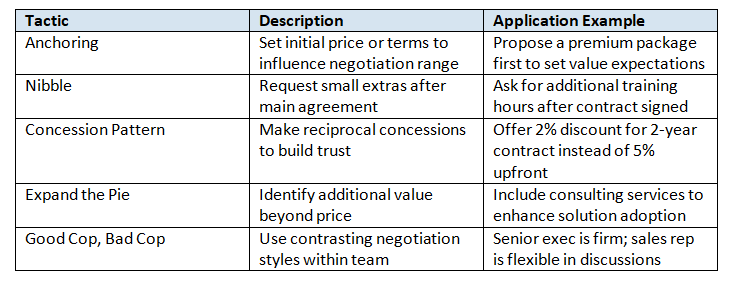
One key principle is anchoring, where the first number put on the table strongly influences the negotiation’s trajectory. For example, if a vendor opens with an initial price offer anchored at $1 million, subsequent counteroffers tend to cluster around that figure, even if the market value is lower. Savvy negotiators use anchoring intentionally, either to set favorable expectations or counteract the buyer’s anchor by reframing.
Framing is another potent technique. How you present information can shift perceptions of value. For instance, rather than emphasizing the cost of a solution, frame it around ROI, risk mitigation, or compliance benefits. This tactic taps into the buyer’s priorities and can soften resistance.
Reciprocity is a social psychology principle that suggests people feel obliged to return favors. In negotiation, offering a small concession early—such as a free trial period or additional training—can encourage the buyer to reciprocate with concessions on pricing or contract terms.
Additionally, the principle of “loss aversion” explains why buyers may react more strongly to potential losses than equivalent gains. A negotiation script that highlights what the buyer risks losing by not adopting your solution (e.g., operational downtime or compliance penalties) can be more persuasive than simply touting benefits.
A real-world example is Cisco’s enterprise sales teams, who train their reps extensively on framing benefits in terms of mitigating risk and enabling growth, effectively aligning negotiation tactics with buyer psychology.
Psychological Principles Summary
· Anchoring: Establishing initial reference points to influence negotiation range
· Framing: Presenting offers to highlight value and reduce perceived risk
· Reciprocity: Using small concessions to encourage buyer cooperation
· Loss Aversion: Emphasizing risks of inaction to motivate decision-making
Tactics for Anchoring, Concessions, and Creating Win-Win Outcomes
Effectively managing offers, counteroffers, and concessions is central to successful B2B sales negotiation. An initial anchor, if set too low or too high, can derail talks, so it must balance assertiveness with realism.
The “Nibble” technique, a classic tactic, involves asking for small additional concessions after the main deal is agreed upon—such as extended payment terms or minor service upgrades. This incremental approach can add value without triggering major pushback.
Structured concessions that follow the “Concession Pattern” (making reciprocal, proportional concessions) maintain negotiation momentum. For example, if a buyer asks for a 5% price reduction, the seller might respond by offering a 3% discount but request a longer contract term in exchange.
Another proven framework is the “Expand the Pie” approach, where negotiators collaborate to identify additional value-creating opportunities beyond price, such as bundled services, performance incentives, or flexible delivery schedules. This shifts the focus from zero-sum bargaining to mutual gain.
The “Good Cop, Bad Cop” tactic is sometimes employed in complex B2B deals, where one team member takes a tougher stance while another acts more accommodating, creating pressure and relief dynamics that can encourage concessions.
Negotiation Scripts and Role-Playing for Enterprise Deals
Scripts provide a structured yet adaptable framework for managing negotiation dialogues, particularly when multiple stakeholders are involved. Effective scripts incorporate open-ended questions, objection handling, and strategic pauses to maintain control and build rapport.
Example script snippet for handling price objections:
Buyer: “Your price is higher than our budget allows.”
Seller: “I understand budget is a key consideration. Can you help me understand which aspects of the price concern you most? This will help me explore options that align with your priorities.”
This approach uses the “Feel-Felt-Found” method—acknowledging feelings, relating to others’ experiences, and sharing insights:
“I understand how you feel about pricing. Other clients felt similarly at first, but they found that the total cost of ownership was lower due to our solution’s efficiency gains.”
Role-playing these scripts internally enables sales teams to simulate real negotiation scenarios, refine responses, and improve confidence. For complex enterprise deals, involving cross-functional teams—sales, legal, finance—in role-play exercises ensures alignment and readiness.
Sample Negotiation Dialogue
Seller: “Based on your needs, the proposed package includes X, Y, and Z. Do these align with your key objectives?”
Buyer: “We need faster implementation timelines.”
Seller: “We can prioritize deployment phases to meet your schedule. To do so, we typically adjust resource allocation, which may impact pricing. Would you be open to discussing a phased payment plan to balance costs?”
Buyer: “That sounds reasonable, but we still need a discount.”
Seller: “If we can agree on a multi-year commitment, I can explore a volume-based discount. What are your thoughts on contract length?”
This script demonstrates flexibility, active listening, and collaborative problem-solving.
Measuring Success: Key Metrics and Post-Negotiation Review
Quantifying negotiation effectiveness is essential for continuous improvement. Key metrics include:
· Win Rate: Percentage of negotiations resulting in closed deals
· Average Deal Size: Measures revenue impact per negotiation
· Concession Ratio: Ratio of concessions given versus received, indicating negotiation balance
· Cycle Time: Duration from negotiation start to agreement, reflecting efficiency
· Customer Satisfaction: Post-negotiation feedback to gauge relational health
Regular post-negotiation debriefs involving sales, procurement, and legal stakeholders facilitate knowledge sharing and identify lessons learned. For instance, if win rates decline, reviewing negotiation transcripts or recordings can uncover recurring objections or misaligned value propositions.
Many enterprise sales organizations use CRM systems with integrated analytics dashboards to track these metrics in real time, enabling data-driven coaching and strategy adjustments.
Frequently Asked Questions
What is BATNA, and why is it important in B2B sales negotiation?
BATNA stands for Best Alternative to a Negotiated Agreement. It represents the most advantageous alternative course of action if current negotiations fail. Knowing your BATNA gives you leverage and confidence during negotiations because it defines your walk-away point. For example, if a supplier’s BATNA is securing a contract with another client at a set price, they won’t accept a deal below that threshold. Likewise, understanding the buyer’s BATNA helps anticipate their flexibility.
How can I effectively use anchoring without alienating the buyer?
Anchoring is powerful but must be applied thoughtfully. Start with a reasonable but optimistic initial offer that reflects your value proposition. Overly aggressive anchors may create distrust or stall negotiations. To soften the anchor, provide objective data or benchmark comparisons supporting your pricing. For instance, “Based on industry standards and the ROI we project, our premium package is priced at $X.” This transparency builds credibility.
What negotiation tactics are most effective for long-term B2B relationships?
Techniques emphasizing collaboration and value creation—such as principled negotiation, expanding the pie, and balanced concessions—foster trust and sustainable partnerships. Avoid hardball tactics like ultimatums or excessive pressure, which can damage relationships. Consistently demonstrating empathy, transparency, and responsiveness helps build rapport and repeat business.
How do I handle multiple stakeholders with conflicting priorities in a negotiation?
Map the decision-making unit early, identifying influencers, gatekeepers, and approvers. Use tailored communication to address each stakeholder’s interests. Facilitate joint meetings or workshops to align priorities and uncover shared objectives. Employ consultative questioning to surface hidden concerns and collaboratively develop solutions that satisfy diverse needs.
What post-negotiation activities improve future outcomes?
Conducting thorough debriefs to analyze what worked and what didn’t is critical. Document lessons learned, update negotiation playbooks, and provide targeted training based on gaps identified. Tracking key metrics like concession ratios and win rates over time reveals trends. Sharing success stories and best practices within the sales team encourages continuous skill development.
Conclusion
Mastering B2B sales negotiation techniques is indispensable for navigating today’s complex enterprise sales environment. By grounding your approach in proven frameworks like BATNA and ZOPA, preparing with data-driven insights, and leveraging psychological principles such as anchoring and framing, you position yourself to create value and close deals that benefit all parties.
Integrating structured tactics, well-crafted scripts, and rigorous performance metrics enables continuous refinement and sustained success. Whether negotiating multi-million-dollar contracts or long-term partnerships, adopting these strategies will empower you to maximize deal outcomes and foster lasting client relationships.
Start applying these techniques today to elevate your negotiation effectiveness and drive your sales performance to new heights.
References
Getting to Yes: Negotiating Agreement Without Giving In, Roger Fisher, William Ury, and Bruce Patton
Never Split the Difference: Negotiating As If Your Life Depended On It, Chris Voss and Tahl Raz
The Art and Science of Negotiation, Howard Raiffa
Negotiation Genius: How to Overcome Obstacles and Achieve Brilliant Results at the Bargaining Table and Beyond, Deepak Malhotra and Max Bazerman
Influence: The Psychology of Persuasion, Robert B. Cialdini