Cross-Cultural Negotiation Strategies: How to Win Deals Across Any Culture

In 2018, a high-stakes automotive joint venture between a leading German manufacturer and a Chinese state-owned enterprise unraveled spectacularly during contract negotiations. Despite months of technical alignment and promising terms, the deal collapsed because German negotiators pushed for rapid, direct decision-making, while their Chinese counterparts expected extensive relationship-building and consensus via guanxi networks before formal commitments. The Germans perceived delays as evasiveness; the Chinese interpreted blunt insistence as disrespect. This cultural blindness cost both sides millions and a strategic partnership opportunity.
Cross-cultural negotiation is fundamentally different from domestic deal-making because it operates within invisible cultural scripts that shape communication styles, trust-building, authority dynamics, and conflict resolution. These scripts—often subconscious—govern assumptions, expectations, and interpretations. In cross-cultural contexts, failing to recognize these can result in misread signals, damaged trust, and lost deals. Understanding and adapting to these invisible dimensions is essential for successful international negotiations.
This definitive guide arms you with extensive knowledge of leading cultural frameworks—including Hofstede’s six dimensions, Erin Meyer’s Culture Map, Richard Lewis’s communication styles, Edward Hall’s context theories, Richard Gesteland’s negotiation dimensions, David Livermore’s Cultural Intelligence (CQ), and Trompenaars & Hampden-Turner’s cultural orientations. You will gain country-specific negotiation insights, step-by-step preparation strategies, expert-level techniques, and exact word-for-word scripts tailored for diverse cultures. Whether you negotiate in Asia, Europe, the Middle East, or the Americas, this guide equips you to close deals with confidence and cultural competence.
· Table of Contents
· The Science of Cultural Differences in Negotiation
· Key Cultural Frameworks with Country Comparisons
· Step-by-Step Cultural Preparation Strategy
· Real-World Case Studies
· Country and Region-Specific Insights
· Advanced Cross-Cultural Negotiation Strategies
· Scripts and Templates for Different Cultures
· Frequently Asked Questions
· Conclusion and Call to Action
· References
The Science of Cultural Differences in Negotiation
Understanding the profound impact of culture on negotiation requires a deep dive into seminal research and cultural models developed by cross-cultural scholars. These frameworks reveal how values, communication patterns, and social norms shape negotiation processes and outcomes across countries.
Geert Hofstede’s six cultural dimensions provide foundational insights. For example, Hofstede’s Power Distance Index (PDI) measures acceptance of hierarchical authority. India scores high on PDI (77), indicating hierarchical respect and deference during negotiations, while Scandinavian countries like Sweden score low (31), reflecting egalitarian approaches. Individualism versus Collectivism (IDV) impacts trust-building; the United States scores 91 on individualism, favoring contractual trust, whereas China’s collectivist score of 20 emphasizes relational trust and guanxi networks.
Erin Meyer’s Culture Map adds nuance with eight negotiation-relevant scales such as Communicating (low-context vs high-context) and Deciding (consensual vs top-down). For instance, Japan’s high-context communication (high indirectness) contrasts with Germany’s low-context directness. Japan’s ringi consensus process exemplifies a consensual decision style, contrasting with the American preference for individual decisive authority.
Richard Lewis’s model categorizes cultures as Linear-Active (e.g., Germany, Swiss), Multi-Active (e.g., Brazil, Italy), and Reactive (e.g., Japan, China). Linear-Active negotiators prefer structured agendas and punctuality, Multi-Active rely on emotional expressiveness and relationship-building, and Reactive cultures value harmony and listening carefully.
Edward Hall’s high-context versus low-context communication theory explains how much meaning is implicit versus explicit. Middle Eastern countries exemplify high-context with heavy reliance on non-verbal cues and relationship primacy, compared to low-context countries like the U.S. and Germany. Hall’s monochronic versus polychronic time dimension affects scheduling and deadlines—U.S. negotiators are monochronic, valuing punctuality; Latin American cultures are more polychronic and flexible.
Richard Gesteland’s dimensions of deal-focus versus relationship-focus and formal versus informal reinforce these patterns. Middle Eastern and Latin American cultures emphasize relationship-focus and formal protocols, while Northern European countries favor deal-focus and informality.
David Livermore’s Cultural Intelligence (CQ) model outlines four capabilities—CQ Drive (motivation), CQ Knowledge (understanding cultural differences), CQ Strategy (planning), and CQ Action (behavioral adaptation)—that negotiators must cultivate to succeed globally.
Trompenaars & Hampden-Turner’s seven dimensions, such as Universalism versus Particularism and Achievement versus Ascription, further illuminate negotiation expectations. For example, Germany’s universalistic approach demands formal rules apply equally, whereas China’s particularism allows for flexible application based on relationships.
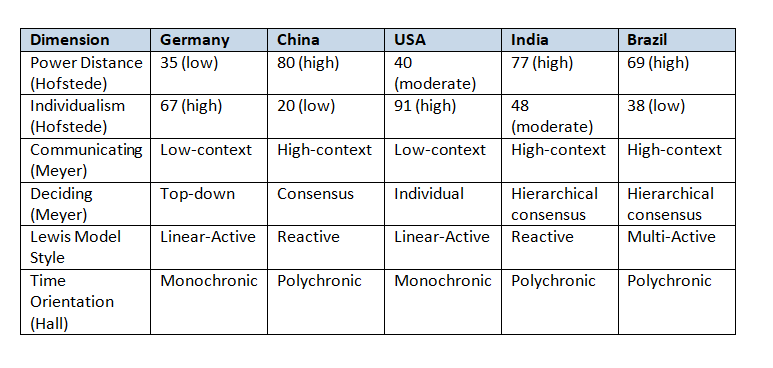
This rich science of cultural differences provides negotiators with the predictive power to anticipate behaviors, respect expectations, and adapt strategies for cross-cultural success.
Key Cultural Frameworks
While many frameworks exist, three key models stand out for negotiation application: Hofstede’s Dimensions, Erin Meyer’s Culture Map, and Richard Lewis’s Communication Styles. Understanding these three allows a comprehensive grasp of national cultural traits influencing negotiation behavior.
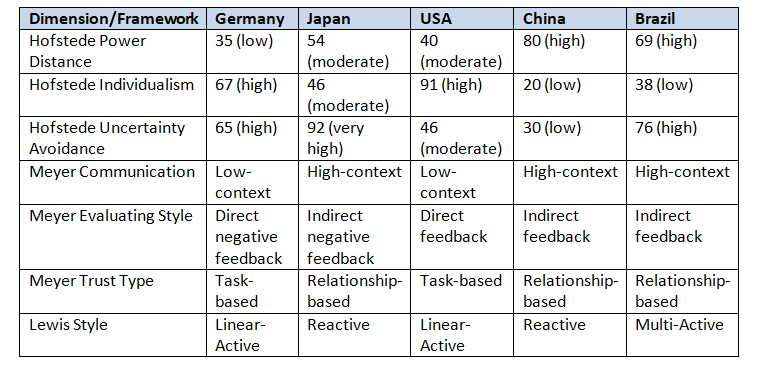
Germany’s low power distance and direct communication style mean negotiators expect clear agendas, efficient meetings, and unemotional argumentation (Sachlichkeit). Japan’s high-context, indirect communication requires patience and understanding of nemawashi (behind-the-scenes consensus-building). American negotiators prefer transactional, direct approaches with individual decision-makers. China’s reliance on guanxi networks and face (mianzi) necessitates long-term relationship investment. Brazil’s Multi-Active style combines warmth, expressiveness, and flexible time management (jeitinho).
Step-by-Step Cultural Preparation Strategy
Preparation is the cornerstone of successful cross-cultural negotiation. Follow these six critical steps:
1. Conduct In-Depth Cultural Research
Use Hofstede Insights, Erin Meyer’s Culture Map, and country-specific business etiquette guides to understand your counterpart’s cultural dimensions. For example, if negotiating in South Korea, recognize the importance of hierarchical respect and nunchi (emotional intelligence). Research social norms, decision-making styles, and communication preferences.
2. Build Relationships Before Business
In high-context and relationship-focused cultures—China, Middle East, India—prioritize trust-building activities such as dinners and informal meetings. Show genuine interest in personal backgrounds to build guanxi or wasta networks. For low-context, deal-focused cultures like Germany or the USA, you can focus more quickly on contracts.
3. Adapt Communication Style
Match your style to the cultural context. Use indirect language and silence strategically in Japan or Arab countries. Be explicit and concise in Germany and the USA. Avoid idioms or slang that may confuse non-native speakers. Employ active listening and observe non-verbal cues as per Edward Hall’s proxemics theory.
4. Develop Trust-Building Protocols
Understand whether trust is task-based (USA, Germany) or relationship-based (China, Brazil). For task-based cultures, deliver on promises punctually and transparently. For relationship-based cultures, invest time in social engagements and honor face-saving norms.
5. Manage Face and Hierarchy Sensitively
In many Asian and Middle Eastern cultures, saving face (mianzi) and respecting hierarchy are crucial. Avoid public criticism or confrontational language. Use intermediaries (nemawashi in Japan) to facilitate consensus. Recognize titles and formal address as signs of respect.
6. Tailor Closing and Follow-Up
Understand culturally preferred decision-making patterns. In France, intellectual debate often precedes commitment; in China, expect multiple rounds to build consensus. Confirm agreements in writing for universalistic cultures and be flexible in particularistic ones. Follow up promptly to demonstrate reliability.
Real-World Case Studies
Case Study 1: Siemens and Saudi Aramco – Navigating Wasta and Formality
Siemens’s negotiation with Saudi Aramco initially faltered because German executives underestimated the significance of wasta—personal connections facilitating trust—and the formal, hierarchical decision-making in Saudi Arabia. After engaging local intermediaries and investing in relationship-building dinners honoring protocol, Siemens secured a multi-billion-dollar energy infrastructure deal. The lesson: prioritize relationships and honor formal hierarchy when negotiating in the Gulf.
Case Study 2: Walmart’s Entry into Germany – Misreading Cultural Expectations
Walmart’s failure in Germany stemmed from ignoring German cultural norms such as privacy, formal distance between employees and customers, and skepticism of overt friendliness. Walmart’s American-style cheerfulness and employee engagement clashed with German expectations of Sachlichkeit and privacy, leading to brand rejection and exit. The lesson: adapt communication style and brand positioning to local cultural preferences.
Case Study 3: IBM’s Joint Venture in Japan – Mastering Nemawashi and Consensus
IBM’s success in Japanese joint ventures came from respecting the nemawashi process—building informal consensus before formal meetings—and embracing the ringi decision-making style. IBM executives spent months engaging middle managers and building consensus, resulting in smooth approvals and long-term collaboration. The lesson: patience and indirect consensus-building pay dividends in high-context hierarchical cultures.
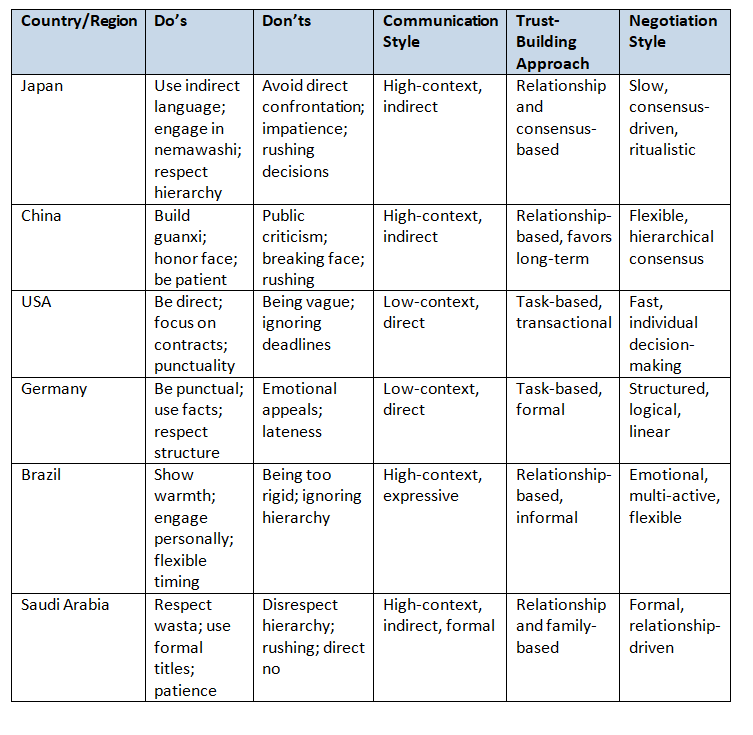
Country/Region-Specific Insights
Advanced Strategies
Managing interpreters effectively is essential in multilingual negotiations. Brief interpreters on technical terms beforehand and maintain eye contact with your counterpart, not the interpreter, to build rapport.
Building guanxi (China), wasta (Middle East), or similar relationship capital requires sustained engagement beyond negotiations—social calls, gift-giving within local customs, and honoring personal milestones.
Navigating hierarchy demands awareness of who holds decision authority behind the scenes. In Korea, reading the hierarchical context and demonstrating nunchi—emotional and social attunement—is critical to showing respect and timing interventions.
Adapting persuasion styles means shifting from logical, data-driven arguments preferred in Germany or the US to emotional, relational appeals favored in Brazil or the Arab world. Use storytelling where appropriate.
Reading non-verbal signals includes understanding proxemics (physical distance), eye contact norms, and gestures. For example, prolonged eye contact is respected in the US but may be confrontational in Japan.
Scripts and Templates
Below are an example of the same negotiation message adapted for four cultures:
Message: Requesting a meeting to discuss partnership terms
“Dear Mr. Müller,
I would like to schedule a meeting next week to review the partnership terms. Please let me know your available times. We will provide a detailed agenda in advance.
Best regards,
“Dear Mr. Tanaka,
I hope this message finds you well. At your convenience, I would be honored to arrange a meeting to humbly discuss the partnership details. I look forward to your kind guidance on a suitable date.
Respectfully,
“Olá Senhor Silva,
I hope you are doing well! I would love to get together next week to talk about our partnership. Whenever you have time, just let me know. Looking forward to catching up!
Abraços,
“Hi John,
I’m reaching out to set up a meeting next week to discuss the partnership terms. Please let me know what time works best for you.
Thanks,
Frequently Asked Questions
1. How can I quickly assess a new culture’s negotiation style before a meeting?
Start by consulting Hofstede Insights and Erin Meyer’s Culture Map for that country. Supplement with country-specific business etiquette guides and, if possible, speak with local experts or colleagues who have experience in that culture.
2. What is the best way to handle disagreements in high-context cultures?
Avoid public confrontation and direct criticism. Use indirect language, ask open-ended questions, and allow space for saving face. Focus on building consensus rather than winning arguments.
3. How important is gift-giving in international negotiations?
Gift-giving varies widely. It’s highly valued in China, Japan, and the Middle East as a trust-building gesture, but can be seen as inappropriate or even bribery in the US or Germany. Research local customs carefully.
4. How do I build trust with relationship-focused cultures when under time pressure?
Prioritize small, consistent gestures that show respect and interest, such as remembering names, following up promptly, and demonstrating cultural knowledge. Where possible, use informal meetings or social settings to deepen trust.
5. Can cultural intelligence be learned, or is it innate?
Cultural intelligence (CQ) can absolutely be developed through training, self-awareness, deliberate practice, and experience. Focusing on CQ Drive, Knowledge, Strategy, and Action improves cross-cultural effectiveness over time.
Conclusion
Mastering cross-cultural negotiation is no longer optional in an interconnected global economy—it is essential for winning deals and forging lasting partnerships. The invisible currents of culture shape every interaction, from communication style to trust-building, decision-making to conflict resolution. By leveraging rigorous cultural frameworks, conducting meticulous preparation, and applying adaptable strategies, negotiators can bridge differences that once seemed insurmountable.
This guide has equipped you with the science, practical tools, country-specific insights, and scripts necessary to navigate the complexities of global negotiations with confidence and cultural intelligence. Now is the time to deepen your cultural competence, embrace diversity as a strategic asset, and unlock new opportunities across borders and cultures.
References
1. Hofstede, G. (2001). Culture’s Consequences: Comparing Values, Behaviors, Institutions and Organizations Across Nations. Sage Publications.
2. Meyer, E. (2014). The Culture Map: Breaking Through the Invisible Boundaries of Global Business. PublicAffairs.
3. Lewis, R. D. (2006). When Cultures Collide: Leading Across Cultures. Nicholas Brealey Publishing.
4. Hall, E. T. (1976). Beyond Culture. Anchor Books.
5. Livermore, D. (2015). Leading with Cultural Intelligence: The Real Secret to Success. AMACOM.
6. Trompenaars, F., & Hampden-Turner, C. (2012). Riding the Waves of Culture: Understanding Diversity in Global Business. McGraw-Hill.