Cultural Intelligence in Negotiation: How to Develop CQ and Use It to Close Deals

In 2015, a multi-million-dollar joint venture between a leading German automotive supplier and a Japanese electronics manufacturer unexpectedly collapsed mere weeks before signing. Despite months of technical alignment and financial modeling, the deal unraveled over seemingly minor communication breakdowns and unmet expectations. German negotiators, relying on direct, fact-based communication, misread the Japanese team's silence and indirect cues as agreement. Conversely, the Japanese side, deeply valuing consensus-building through nemawashi and ringi processes, felt their unspoken concerns were ignored. This cultural blind spot cost both parties not only a lucrative deal but also valuable trust and reputation in each other's markets.
This story illustrates why cross-cultural negotiation is fundamentally different from domestic deal-making. It’s not merely about numbers or contractual terms but the invisible cultural scripts that shape how people communicate, make decisions, build trust, and save face. These are assumptions negotiators often don't even realize they're making—misreading indirect signals, overlooking hierarchical sensitivities, or failing to invest time in relationship-building. Without cultural intelligence (CQ), these unseen dynamics can sabotage even the most promising negotiations.
In this comprehensive guide, you will master the essential cultural frameworks from Geert Hofstede’s six dimensions to Erin Meyer’s Culture Map and David Livermore’s CQ model. You will gain country-specific insights from Japan’s nemawashi to the Middle East’s wasta, receive step-by-step preparation strategies, and learn exact word-for-word scripts tailored to diverse cultural contexts. Whether you are a global sales director, diplomat, or HR leader managing international teams, this pillar article equips you with actionable tools to elevate your cross-cultural negotiation outcomes and close deals with confidence.
· Table of Contents
· The Science of Cultural Differences in Negotiation
· Key Cultural Frameworks Comparison
· Step-by-Step Cultural Preparation Strategy
· Real-World Case Studies
· Country/Region-Specific Cultural Insights
· Advanced Cross-Cultural Negotiation Strategies
· Scripts and Templates for Different Cultures
· Frequently Asked Questions (FAQs)
· Conclusion and Call to Action
· References
The Science of Cultural Differences in Negotiation
Understanding the underlying cultural dimensions that influence negotiation behaviors is paramount for any global negotiator. Several foundational researchers and models offer insights into how cultures differ and how these differences manifest in negotiations.
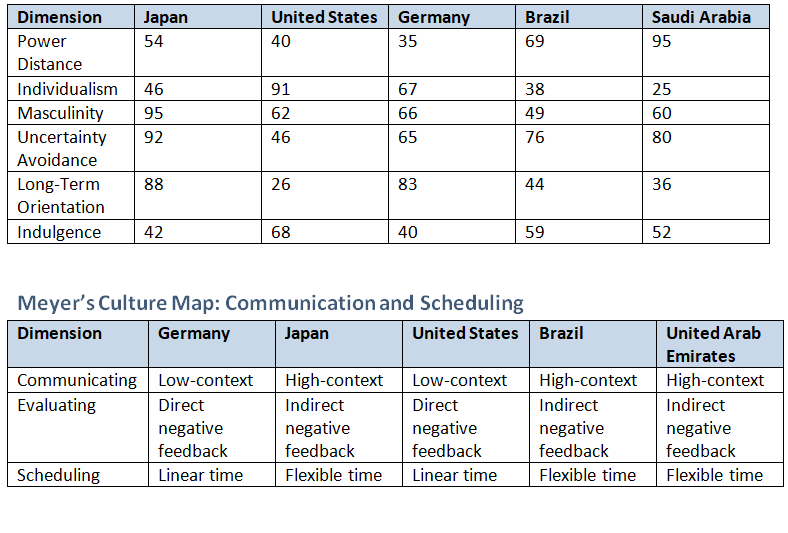
Geert Hofstede’s six cultural dimensions remain seminal in cross-cultural studies. They include Power Distance (the degree to which inequality is accepted), Individualism vs Collectivism, Masculinity vs Femininity (assertiveness vs nurturing), Uncertainty Avoidance (tolerance for ambiguity), Long-Term vs Short-Term Orientation, and Indulgence vs Restraint.
For example, Japan scores high on Power Distance (54) and Long-Term Orientation (88), reflecting hierarchical respect and a future-focused approach, while the United States has lower Power Distance (40) and scores highly on Individualism (91), indicating preference for egalitarianism and personal autonomy. These differences affect how decisions are made and communicated—Japanese negotiators emphasize consensus and seniority, whereas Americans prefer direct, individual accountability.
Erin Meyer’s Culture Map provides eight dimensions specifically related to business communication and negotiation: communicating (low-context vs high-context), evaluating (direct vs indirect negative feedback), persuading (principles-first vs applications-first), leading (egalitarian vs hierarchical), deciding (consensual vs top-down), trusting (task-based vs relationship-based), disagreeing (confrontational vs avoids confrontation), and scheduling (linear vs flexible time).
For instance, the Dutch are known for direct negative feedback (evaluating) and linear time management, while Koreans rely on high-context communication and flexible scheduling, reflecting the importance of relationship harmony and situational adaptation.
Richard Lewis categorizes cultures into Linear-Active, Multi-Active, and Reactive types. Germans and Scandinavians exemplify Linear-Active—task-oriented, organized, and factual. Latin Americans and Arabs are Multi-Active—emotionally expressive, prioritizing relationships and flexibility. Asians, particularly Chinese and Japanese, are Reactive—listening carefully, avoiding confrontation, and emphasizing harmony.
Edward Hall’s high-context vs low-context communication theory further explains how much is communicated implicitly. For example, Japan and Arab countries are high-context, relying heavily on nonverbal cues and shared understandings, whereas the U.S. and Germany are low-context with explicit verbal communication.
Richard Gesteland’s four dimensions—deal-focus vs relationship-focus, formal vs informal, rigid-time vs fluid-time, and expressive vs reserved—help negotiators grasp behavioral expectations. For example, Brazilians tend toward relationship-focus, fluid-time, and expressive interactions, while Germans are deal-focused, rigid-time, and reserved.
David Livermore’s Cultural Intelligence (CQ) model integrates these frameworks into a four-part capability: CQ Drive (motivation), CQ Knowledge (understanding cultural differences), CQ Strategy (planning and awareness), and CQ Action (adapting behaviors). Developing high CQ enables negotiators to decode cultural signals accurately and flexibly adapt strategies.
Trompenaars & Hampden-Turner add dimensions such as universalism vs particularism (rules vs relationships), individualism vs communitarianism, neutral vs emotional, specific vs diffuse, and achievement vs ascription. For example, the U.K. leans toward universalism and achievement, favoring rule-based negotiations and merit, while China is particularist and ascriptive, emphasizing relationships and status.
Hofstede’s Six Dimensions: Selected Country Scores
Key Cultural Frameworks
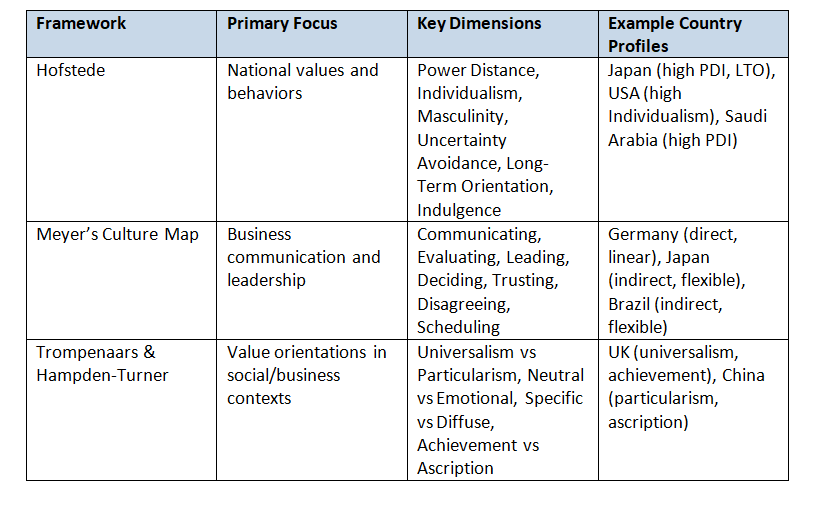
To navigate cross-cultural negotiations effectively, mastering multiple frameworks is essential. Each offers unique lenses to interpret behavior and plan engagement.
1. Hofstede’s Dimensions: Provides macro-level national cultural values affecting negotiation styles and expectations.
2. Erin Meyer’s Culture Map: Offers business-specific communication and leadership dimensions critical for daily negotiation interactions.
3. Trompenaars & Hampden-Turner Model: Focuses on value orientations impacting trust, conflict resolution, and decision-making.
Step-by-Step Cultural Preparation Strategy
Preparing for a cross-cultural negotiation requires deliberate, structured steps beyond conventional deal prep:
Step 1: Conduct In-Depth Cultural Research
Understand the counterpart’s cultural dimensions using Hofstede, Meyer, and local customs. For example, researching China’s guanxi system and mianzi (face) concepts prepares negotiators to invest in relationship-building and avoid public embarrassment.
Step 2: Map Relationship-Building Expectations
Identify if the culture prioritizes relationships over transactions (e.g., Middle East’s wasta or Brazil’s warmth). Plan initial meetings focused on rapport and trust rather than immediate deal talk.
Step 3: Adapt Communication Styles
Adjust tone, directness, and feedback style. For instance, Japanese counterparts prefer indirect communication and reading between the lines, while Americans appreciate straightforwardness.
Step 4: Build Trust Strategically
Use culturally appropriate trust-building approaches: task-based trust in Germany vs relationship-based trust in India. Incorporate social rituals, gift-giving, or informal meetings as relevant.
Step 5: Manage Face and Hierarchical Sensitivities
Recognize the importance of face-saving in East Asia and the Middle East. Avoid public disagreement or criticism that could cause loss of face and derail negotiations.
Step 6: Plan Closing and Follow-Up Carefully
Closing styles vary: Americans may expect explicit, quick closings, while Japanese prefer consensus and may require multiple rounds of confirmation. Prepare to be patient and offer written confirmations to solidify agreements.
Real-World Case Studies
Case Study 1: The Failed German-Japanese Automotive Deal
The 2015 failed joint venture illustrates how ignoring Japan’s consensus-driven nemawashi process and underestimating hierarchical respect led to unvoiced concerns and deal collapse. Lesson: invest time in informal pre-negotiation consensus-building.
Case Study 2: Successful Brazilian-American Tech Partnership
An American tech firm entering Brazil adapted by embracing warmth, expressive communication, and flexible scheduling. They prioritized relationship-building dinners and informal discussions, gaining trust and closing a multi-year contract. Lesson: adapt scheduling and interpersonal style to local norms.
Case Study 3: Saudi Arabian Energy Negotiation
Western negotiators initially pushed for rigid schedules and quick decisions with Saudi partners, causing frustration. After shifting to a relationship-focused approach respecting wasta and fluid time, negotiations proceeded smoothly, culminating in a multi-billion-dollar deal. Lesson: respect fluid-time and relational dynamics in Gulf cultures.
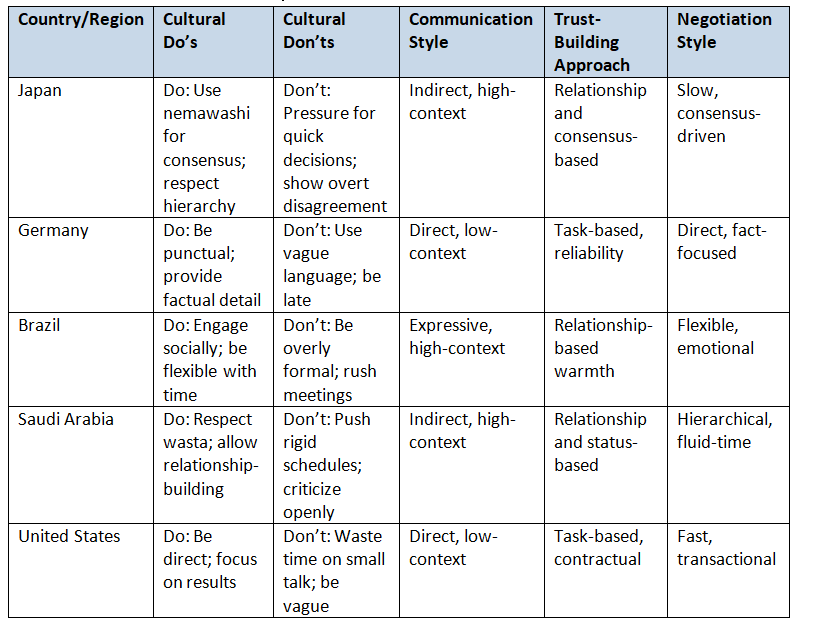
Country/Region-Specific Insights
Advanced Strategies
Experienced negotiators employ nuanced techniques to navigate complex cultural dynamics:
- Managing Interpreters: Select culturally savvy interpreters and brief them thoroughly on negotiation objectives and subtle cues. Avoid literal translation; encourage contextualized interpretation.
- Building Guanxi, Wasta, and Other Networks: Invest time in social rituals, gift exchanges, and informal meetings to build powerful connections critical in China, Middle East, and Latin America.
- Navigating Hierarchy and Face: Address senior decision-makers respectfully; avoid direct confrontation or public criticism that can cause loss of face, especially in East Asia and Arab cultures.
- Adapting Persuasion Styles: Use principles-first reasoning in France and Germany, whereas applications-first may work better in the U.S. Tailor arguments to local logic and values.
- Reading Non-Verbal Signals: Be attuned to silence, indirect eye contact, body posture, and proxemics. For example, Korean nunchi (reading the room) reveals unspoken sentiments.
Scripts and Templates
Below are sample scripts conveying the same core negotiation message—requesting a timeline confirmation—adapted for cultural contexts.
German Context (Direct, Formal)
“Dear Herr Schmidt,
To ensure alignment on our project milestones, could you please confirm the proposed delivery timeline by next Wednesday, March 15th? Your prompt response will help us to coordinate internal resources efficiently.
Best regards,
Japanese Context (Indirect, Polite)
“Dear Mr. Tanaka,
I hope this message finds you well. Regarding our ongoing collaboration, we would be grateful if you might kindly share your thoughts on the tentative delivery schedule at your earliest convenience. We fully appreciate your careful consideration and look forward to your guidance.
Respectfully,
Brazilian Context (Warm, Expressive)
“Olá Senhor Silva,
I hope all is well with you! We’re excited about our partnership and wanted to check in on the delivery timeline. Whenever you have a moment, could you please let us know how things are progressing? Looking forward to hearing from you soon!
Abraços,
American Context (Direct, Efficient)
“Hi John,
Can you confirm the delivery timeline by the end of this week? We need to finalize our internal plans. Thanks for your quick reply.
Best,
Frequently Asked Questions
Q1: What is Cultural Intelligence (CQ) and why is it important in negotiation?
Cultural Intelligence is the capability to function effectively across cultural contexts by understanding cultural differences (CQ Knowledge), staying motivated (CQ Drive), planning culturally appropriate approaches (CQ Strategy), and adapting behavior (CQ Action). CQ reduces misunderstandings and builds trust in cross-cultural negotiations.
Q2: How do I prepare for a negotiation with a high-context culture like Japan or Saudi Arabia?
Research nonverbal cues, invest time in relationship-building, avoid direct confrontation, respect hierarchy, and be patient with consensus processes such as nemawashi or wasta. Use indirect communication and carefully manage face-saving.
Q3: Can I negotiate the same way with all cultures?
No. Effective negotiation requires adapting communication style, decision-making approach, trust-building, and scheduling to cultural preferences. For example, Germans prefer direct, task-focused negotiation, while Brazilians value warmth and flexibility.
Q4: How do I handle disagreements in cultures that avoid confrontation?
Use indirect disagreement techniques such as asking open-ended questions, offering suggestions rather than direct criticism, and reading between the lines. Build rapport and trust so sensitive topics can be addressed later.
Q5: What role does hierarchy play in cross-cultural negotiations?
Hierarchy influences who participates, how decisions are made, and communication style. Cultures like Japan, India, and Saudi Arabia emphasize respect for seniority, requiring deference and sometimes multiple layers of approval before closing deals.
Conclusion
Mastering cultural intelligence is no longer optional but essential for successful international negotiations. By understanding the invisible scripts that govern communication, decision-making, and trust in diverse cultures, negotiators can transcend misunderstandings and unlock mutually beneficial deals. Applying rigorous frameworks, preparing strategically, and adapting language and behavior to cultural contexts empower you to build lasting relationships and close deals across borders.
Invest in developing your CQ Drive, Knowledge, Strategy, and Action today. Use the real-world insights, scripts, and checklists provided here as your playbook for navigating cultural complexities. The next time you approach a cross-cultural negotiation, you won’t just be making a deal—you’ll be building bridges that endure.
References
- Hofstede, G. (2011). *Dimensionalizing Cultures: The Hofstede Model in Context*. Online Readings in Psychology and Culture.
- Meyer, E. (2014). *The Culture Map: Breaking Through the Invisible Boundaries of Global Business*. PublicAffairs.
- Livermore, D. (2015). *Leading with Cultural Intelligence: The Real Secret to Success*. AMACOM.
- Trompenaars, F., & Hampden-Turner, C. (2012). *Riding the Waves of Culture: Understanding Diversity in Global Business*. Nicholas Brealey Publishing.
- Hall, E.T. (1976). *Beyond Culture*. Anchor Books.
- Gesteland, R.R. (2012). *Cross-Cultural Business Behavior: Marketing, Negotiating, Sourcing and Managing Across Cultures*. Copenhagen Business School Press.