Handling Objections in B2B Negotiations

In the high-stakes world of B2B sales, objections are not roadblocks—they are opportunities. Imagine negotiating a multi-million dollar contract with a major enterprise client who suddenly raises concerns about pricing, product fit, or contract terms. Your ability to navigate these objections gracefully can mean the difference between sealing a deal and losing a strategic partnership. In today’s complex and competitive market, mastering objection handling is a core skill that every B2B sales professional and negotiator must develop.
Objections in B2B negotiations often stem from deeper concerns such as risk mitigation, budget constraints, or misalignment of expectations. Ignoring or mishandling these objections can stall progress and erode trust. Conversely, addressing them with structured strategies and psychological insight can transform hesitations into commitments. This comprehensive guide will equip you with actionable frameworks, real-world examples, dialogue scripts, and measurable tactics to confidently manage objections and steer negotiations to successful outcomes.
By the end of this article, you will understand how to anticipate objections, apply negotiation psychology, use proven techniques like BATNA and ZOPA to your advantage, and deploy tailored communication strategies to resolve buyer resistance effectively. Whether you are a sales leader, procurement professional, or negotiation consultant, this pillar page will elevate your objection handling expertise for complex B2B deals.
· Table of Contents
· Understanding the Nature of Objections in B2B Negotiations
· Preparing to Handle Objections: Research and Mindset
· Key Techniques and Frameworks for Objection Handling
· Communication Tactics and Scripts for Overcoming Resistance
· Measuring Success: Metrics and Continuous Improvement
· Real-World B2B Case Studies: Objections Overcome
· Frequently Asked Questions
· Conclusion and Next Steps
Understanding the Nature of Objections in B2B Negotiations
Objections in B2B settings differ significantly from consumer sales due to the complexity, scale, and multiple stakeholders involved. Typically, objections arise from legitimate concerns about ROI, integration challenges, or legal and compliance risks. Recognizing that objections signal engagement rather than rejection is the first mindset shift.
Objections can be categorized into these primary types:
· Price and Budget Concerns
· Product or Service Fit and Functionality
· Contractual Terms and Conditions
· Timing and Implementation Challenges
· Internal Stakeholder Alignment
Each category requires tailored responses grounded in empathy and factual clarity. For example, if a procurement team balks at price, it may be an opportunity to revisit your value proposition or discuss flexible payment terms rather than immediately conceding on cost.
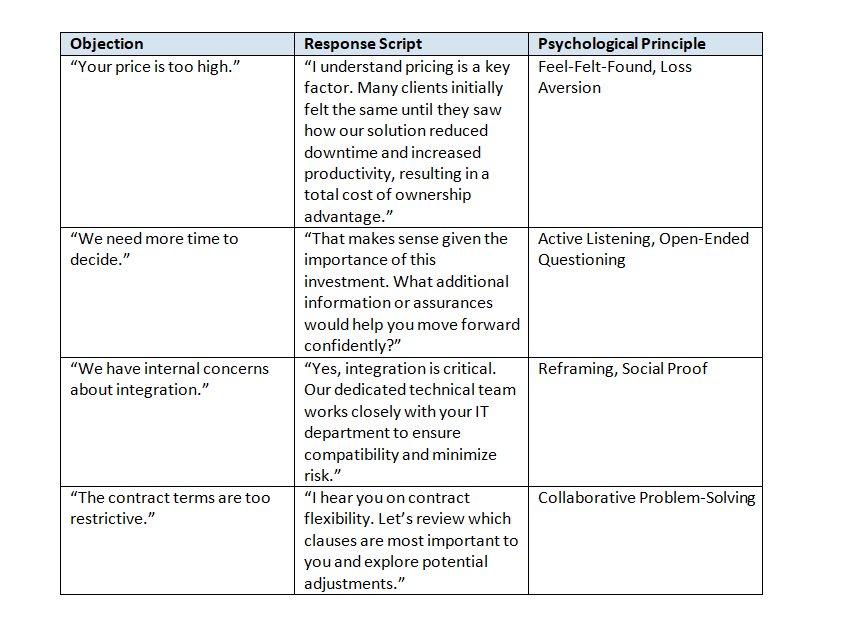
Understanding the psychological mechanisms behind objections can improve your response strategy. The “Loss Aversion” principle, from behavioral economics, explains why buyers may focus more on potential risks than on benefits. Anchoring bias—the tendency to rely heavily on the first piece of information offered—can also influence initial resistance to pricing or terms.
Anticipating these mental models allows negotiators to frame responses that reduce perceived risk and increase trust. For instance, sharing case studies or third-party validation can counteract loss aversion by demonstrating proven success.
Preparing to Handle Objections: Research and Mindset
Preparation is the foundation of effective objection handling. This phase involves gathering intelligence about the client, understanding their business challenges, and mapping out potential objections before they arise.
In complex B2B deals, multiple decision-makers and influencers are involved. Use tools like the Stakeholder Matrix to identify key players, their priorities, and potential objections. For example, the CFO may focus on cost savings and compliance, while the IT director emphasizes integration and security.
· Identify primary stakeholders and their pain points
· Research industry trends affecting the client
· Analyze competitor offerings and positioning
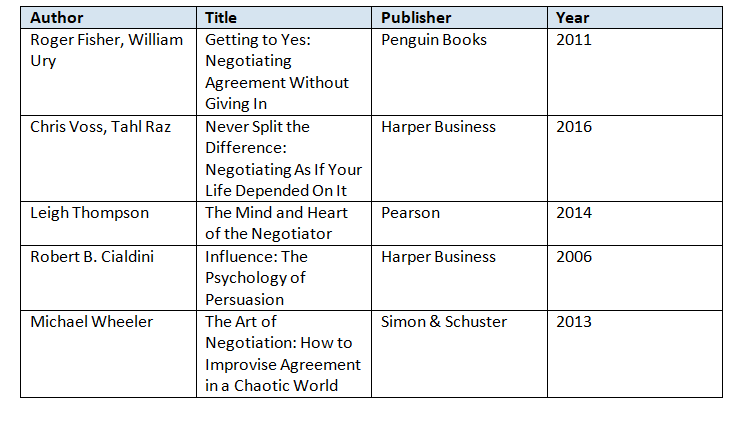
BATNA is a critical negotiation framework popularized by Fisher and Ury in "Getting to Yes." Knowing your BATNA empowers you to walk away when objections cannot be resolved favorably. Simultaneously, understanding the client’s BATNA helps you gauge their flexibility.
Example: If your client has an alternative supplier offering a cheaper but lower-quality solution, emphasizing your product’s ROI and risk mitigation can justify premium pricing.
Approach objections with curiosity rather than defensiveness. Use open-ended questions to uncover underlying concerns. For example, instead of rebutting a “too expensive” objection immediately, ask “Can you share what specific budget constraints you’re facing?”
Empathy builds rapport and signals that you’re solving problems collaboratively rather than pushing a hard sale.
Key Techniques and Frameworks for Objection Handling
A classic method for addressing objections, this technique involves empathizing with the prospect, sharing how others have felt similarly, and explaining what they found after deeper engagement.
Script example:
“I understand how you feel about the upfront cost. Many of our clients felt the same way initially, but they found that over 12 months, the efficiency gains more than compensated for the investment.”
Setting a strong anchor early in the negotiation helps define expectations. For example, present a premium package first to establish a high-value reference point, then introduce more cost-effective options.
Reframing objections turns negatives into positives. If a client says, “This seems complicated to implement,” respond with, “That’s a fair point; our implementation team specializes in minimizing disruption and provides hands-on support to ensure a smooth transition.”
Borrowed from improvisational theater, this technique involves acknowledging the objection and building on it constructively.
Example:
Client: “The timeline is too tight.”
You: “Yes, and we have a proven agile rollout method that can accelerate deployment without sacrificing quality.”
Understanding the overlap between your minimum acceptable terms and the client’s maximum acceptable terms helps you identify the feasible negotiation zone. If objections threaten to push terms outside the ZOPA, consider creative concessions or alternative value propositions.
Communication Tactics and Scripts for Overcoming Resistance
Effective objection handling hinges on communication skills that combine active listening, clear articulation, and strategic questioning.
Demonstrate genuine attention by paraphrasing objections and confirming understanding.
Example script:
“So what I’m hearing is that the main concern is how this solution integrates with your existing systems. Is that correct?”
This validation encourages further dialogue and reduces adversarial tension.
Use both open-ended and closed-ended questions to explore objections deeply.
· “Can you walk me through the concerns your team has about the contract terms?”
· “Is this timeline flexibility a hard requirement or negotiable?”
· “What criteria will be most important for your decision?”
Counter objections with relevant data, case studies, testimonials, or ROI calculations. For example, “Our client XYZ Corporation, in your industry, realized a 20% reduction in operational costs within six months.”
Measuring Success: Metrics and Continuous Improvement
Handling objections effectively is not a one-time skill but an evolving capability that requires monitoring and refinement.
Track these metrics to evaluate objection handling effectiveness:
· Objection Conversion Rate: Percentage of objections successfully resolved leading to progression in the sales cycle.
· Deal Velocity: Time taken from first objection to deal closure.
· Win Rate: Percentage of deals closed versus total opportunities with objections.
· Stakeholder Satisfaction: Feedback from clients on negotiation experience.
Conduct structured reviews with your sales or negotiation team to analyze objection handling outcomes. Identify which objections are recurring and brainstorm new tactics.
· What objections were raised?
· How were they addressed?
· What worked well and what could improve?
· Are there knowledge gaps or training needs?
Modern CRM platforms can tag and categorize objections for trend analysis. AI-powered conversation analytics can highlight objection triggers and suggest optimal responses based on historical data.
Real-World B2B Case Studies: Objections Overcome
The client raised objections regarding pricing and feature relevance amid budget cuts. Using the Feel-Felt-Found technique, the sales team shared success stories from similar retailers who experienced measurable cost savings. They reframed the pricing objection by offering modular add-ons aligned with the client’s priorities, expanding the ZOPA. The result was a 15% upsell and a multi-year renewal.
During contract negotiations, the buyer’s engineering team objected to the complexity of installation. The manufacturer responded by involving their technical specialists early, delivering a detailed integration roadmap. Through active listening and addressing specific pain points, objections were resolved, leading to a $3 million contract.
A consulting proposal faced objections from different departments with conflicting priorities. The negotiator used stakeholder analysis to map objections and facilitated a workshop to align expectations. By acknowledging concerns and customizing deliverables, the deal proceeded smoothly.
Frequently Asked Questions
While you cannot predict every objection, thorough research and stakeholder analysis significantly reduce surprises. Developing flexible frameworks like Feel-Felt-Found and practicing active listening allow you to adapt responses dynamically. Role-playing with your team using real scenarios also builds confidence.
Concessions should be strategic, aligned with your BATNA and ZOPA analysis. Avoid early concessions that weaken your position. Instead, seek to understand the objection’s root cause and explore creative alternatives that preserve value. For example, offering payment terms instead of discounting price.
Use stakeholder mapping to identify each party’s priorities and tailor communication accordingly. Facilitate joint discussions to surface concerns openly and find common ground. Employ collaborative techniques like “Yes, And” to build consensus.
Yes. Effectively addressing objections demonstrates empathy, transparency, and commitment to client success. This builds trust and positions you as a strategic partner rather than a vendor, enhancing retention and upsell opportunities.
Negotiation psychology provides insight into cognitive biases like loss aversion, anchoring, and confirmation bias that influence decision-making. Leveraging these insights enables you to frame responses that reduce perceived risks and guide buyers toward agreement.
Conclusion
Handling objections in B2B negotiations is both an art and a science. By reframing objections as opportunities for dialogue, applying proven negotiation frameworks, and communicating with empathy and clarity, you can transform resistance into collaboration. Preparation through stakeholder analysis, understanding psychological drivers, and deploying tactical scripts ensures you remain in control even under pressure.
As B2B markets become more complex and competitive, excellence in objection handling will distinguish top-performing sales professionals and negotiators. Start integrating these strategies today to increase your close rates, accelerate deal velocity, and build enduring client relationships.
Ready to master objection handling and elevate your B2B negotiation outcomes? Begin by assessing your current objection scenarios and applying the frameworks discussed here. Empower your team with role-play exercises and data-driven feedback loops for continuous improvement. Success in negotiation is within your reach.