How to Negotiate B2B Deals Without Discounting

In today’s competitive B2B marketplace, sales teams often feel pressured to slash prices just to secure deals. Imagine a SaaS company repeatedly conceding steep discounts to enterprise clients, only to find margins shrinking and customer expectations for future deals rising. This common scenario illustrates why relying on discounting as a negotiation tactic is both unsustainable and detrimental to long-term profitability.
With buyers becoming increasingly sophisticated and procurement teams well-versed in negotiation tactics, sellers must shift from discount-driven conversations to value-oriented discussions. Negotiating B2B deals without discounting is not only possible but can strengthen partnerships, increase deal sizes, and protect your pricing integrity.
This comprehensive guide will walk you through actionable strategies, psychological principles, and real-world frameworks like BATNA and ZOPA to help you negotiate confidently without resorting to discounts. You will also find practical scripts, industry examples, and measurable tactics designed to preserve margins while delivering compelling value.
· Table of Contents
· Understanding the Pitfalls of Discounting in B2B Sales
· Preparing Your B2B Negotiation Strategy: BATNA and ZOPA Frameworks
· Shifting the Conversation: Value-Based Selling Techniques
· Leveraging Non-Price Concessions and Creative Deal Structuring
· Psychological Principles to Strengthen Your Negotiation Position
· Real-World Scripts and Dialogue Examples for No-Discount Negotiations
· Measuring Success: Key Metrics and Post-Negotiation Analysis
· Frequently Asked Questions
· Conclusion
· References
Understanding the Pitfalls of Discounting in B2B Sales
Discounting may appear to be the quickest path to closing a deal, but in B2B sales, it often leads to several unintended consequences. First, cutting prices erodes profit margins, undermining the financial health of your company. Second, frequent discounting trains customers to expect lower prices in every negotiation, reducing future pricing power. Finally, discounting can devalue your brand and signal a lack of confidence in your product or service.
A classic example is a manufacturing supplier who drops prices by 10-15% to win a contract. While the deal closes, the supplier’s profit per unit decreases, and the client begins to pressure for even deeper discounts on renewals or expansions. Over time, the supplier becomes locked into a race to the bottom, sacrificing profitability for volume.
Understanding these pitfalls is the first step toward adopting a negotiation mindset focused on value rather than price. It also helps to internalize that discounting is often a symptom of poor preparation or lack of leverage rather than a necessary concession.
Preparing Your Negotiation Strategy: BATNA and ZOPA Frameworks
Preparation is the cornerstone of successful no-discount negotiations. Two critical frameworks in this phase are BATNA (Best Alternative to a Negotiated Agreement) and ZOPA (Zone of Possible Agreement).
Conducting thorough market research, understanding customer pain points, and quantifying your product’s ROI strengthens your BATNA and clarifies the ZOPA. This preparation also involves mapping decision-makers and influencers, so you negotiate with the right stakeholders.
Steps to Prepare Using BATNA and ZOPA
· Identify your best alternatives if negotiations falter (other clients, internal projects, etc.)
· Research the buyer’s alternatives and constraints to estimate their BATNA
· Calculate your minimum acceptable price and buyer’s maximum willingness to pay
· Define the ZOPA to visualize the negotiation boundaries
· Develop fallback positions involving non-price terms for flexibility
Shifting the Conversation: Value-Based Selling Techniques
To negotiate without discounting, the conversation must pivot from price to value. Value-based selling emphasizes how your solution solves the buyer’s key challenges, improves efficiency, or drives revenue growth.
Quantifying value in clear financial terms is critical. Use ROI calculators, case studies, and testimonials to demonstrate how your product’s benefits outweigh the cost. Real-world B2B sellers often leverage value quantification to justify premium pricing and preempt discount requests.
Value Selling Frameworks to Use
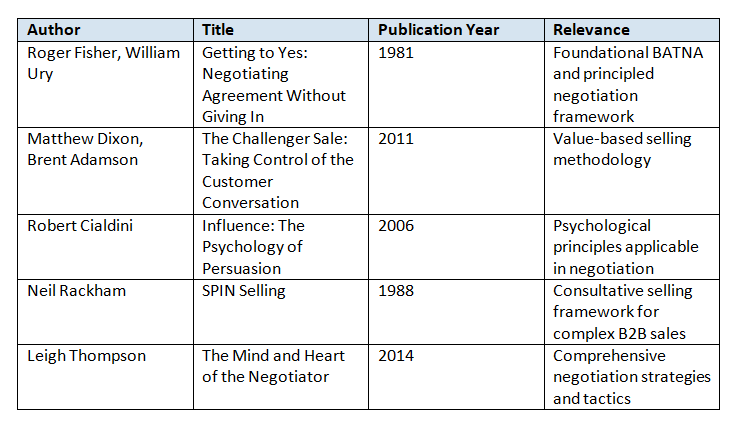
· SPIN Selling (Situation, Problem, Implication, Need-Payoff) – uncover and amplify pain points
· Challenger Sale – teach, tailor, and take control of the conversation toward value
· Value Pyramid – link product features to business outcomes and emotional benefits
Leveraging Non-Price Concessions and Creative Deal Structuring
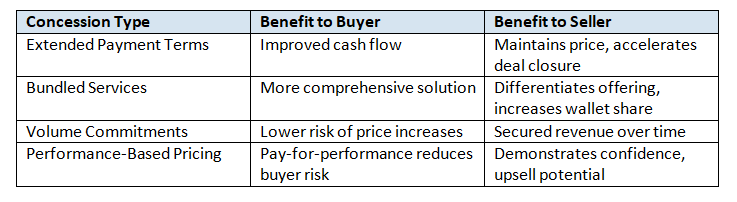
When buyers push back on price, skilled negotiators deploy non-price concessions to create win-win outcomes without eroding margins. These may include:
· Extended payment terms or financing options that improve buyer cash flow
· Bundling additional services or support to enhance perceived value
· Volume commitments or multi-year contracts in exchange for stable pricing
· Customized implementation timelines or training resources
For example, a B2B cybersecurity firm might decline to lower license fees but offer a free additional training session or enhanced support package. This approach reinforces value and builds goodwill.
Creative deal structuring also allows flexibility. Consider performance-based contracts where part of the payment is tied to achieving agreed KPIs. This aligns interests without upfront discounting.
Example Deal Structure Table
Psychological Principles to Strengthen Your Negotiation Position
Leveraging psychology in negotiations can help you resist discount pressure and steer dialogue toward value. Key principles include:
Understanding these cognitive biases allows you to craft persuasive narratives that reduce the emotional urge to discount.
Anchoring Script Example
“Based on our comprehensive solution tailored to your needs, the investment starts at $150,000 per year. This reflects the full scope of services and support included. Let’s discuss which parts of this package create the most value for your team.”
Real-World Scripts and Dialogue Examples for No-Discount Negotiations
Mastering the language of no-discount negotiations is vital to maintain confidence and professionalism. Below are examples of responses to common discount requests:
· Buyer: “Can you offer us a 10% discount to win this deal?”
Seller: “I understand budget is important. Instead of a discount, let’s explore how we can increase the value you receive—perhaps through additional training or priority support that can deliver faster ROI.”
· Buyer: “Your price is higher than competitors. Can you match their rates?”
Seller: “Our pricing reflects the comprehensive benefits and proven results we deliver, which differentiates us from competitors. Let me share how our clients have achieved measurable cost savings that justify this investment.”
· Buyer: “We need a better price to move forward today.”
Seller: “I appreciate the urgency. To keep within your budget, we could consider adjusting the contract length or payment terms rather than lowering the price, which allows us to maintain service levels without compromising quality.”
These scripts employ value reinforcement, alternative concessions, and confidence to deflect discount pressure effectively.
Measuring Success: Key Metrics and Post-Negotiation Analysis
To ensure your no-discount negotiation approach delivers results, track essential metrics and conduct thorough reviews after each deal:
· Win Rate — measure closed deals without discounting versus those with concessions
· Average Deal Size — monitor if value selling increases deal value over time
· Margin Preservation — track gross margins to assess discount impact
· Sales Cycle Length — analyze if no-discount strategies affect deal velocity
· Customer Satisfaction and Retention — evaluate long-term relationship health post-negotiation
Regular analysis helps identify patterns, refine tactics, and reinforce best practices across your sales team.
Frequently Asked Questions
Discounting is often a default response to buyer pushback due to pressure to close deals quickly or meet quotas. Buyers also expect discounts as a negotiation norm. However, over-reliance on discounting usually signals weak preparation or lack of value articulation, making it a suboptimal strategy.
Train your team on value-based selling frameworks like SPIN and Challenger Sale, educate them on BATNA and ZOPA, and provide scripts for handling discount requests. Role-playing and sharing success stories of no-discount wins also build confidence.
Assess your BATNA carefully. If walking away is preferable to conceding price, be prepared to do so. Alternatively, explore non-price concessions or creative deal terms to create value without lowering price.
Yes. Even in price-sensitive markets, buyers respond to clear demonstrations of ROI, risk reduction, or total cost of ownership advantages. Tailoring value messaging to specific buyer priorities is key.
Track metrics like margin preservation, win rate without discounts, average deal size, and customer retention. Qualitative feedback from customers on perceived value also provides insights.
Conclusion
Negotiating B2B deals without discounting is not only achievable but essential for sustaining profitability and building strong customer relationships in today’s complex buying environment. By preparing thoroughly with frameworks like BATNA and ZOPA, shifting conversations to value-based selling, leveraging creative concessions, and applying psychological principles, sales teams can confidently hold firm on pricing.
Implementing these strategies requires practice, discipline, and a mindset shift away from price as the primary lever. However, the payoff includes healthier margins, more strategic deals, and long-term customer loyalty. Start integrating these tactics today to transform your negotiation outcomes and future-proof your sales approach.
References