How to Negotiate Contract Terms Effectively

Contract negotiations are pivotal moments that can define the success or failure of professional relationships and business outcomes. Understanding how to negotiate contract terms effectively is not just about getting the best price or the most favorable conditions — it’s about creating value, managing risk, and establishing trust between parties. Whether you are a business owner, procurement specialist, freelancer, or legal professional, mastering the nuances of contract negotiation can save you money, time, and future headaches.
In this comprehensive guide, you will learn actionable strategies supported by psychological principles and real-world examples to help you approach contract negotiations with confidence and clarity. We will cover everything from preparation and understanding leverage to communication techniques and closing the deal. By the end, you will be equipped with specific tools and templates to negotiate contract terms that align with your goals and foster positive, long-term partnerships.
· Table of Contents
· Preparing for Contract Negotiation: Research and Strategy
· Understanding Key Contract Terms and Clauses
· Leveraging Negotiation Techniques and Psychological Principles
· Effective Communication and Framing in Negotiations
· Managing Difficult Negotiations and Overcoming Deadlocks
· Closing the Deal: Agreement and Documentation
· Frequently Asked Questions About Contract Negotiation
Preparing for Contract Negotiation: Research and Strategy
Preparation is the cornerstone of any successful negotiation. Entering a contract negotiation without thorough preparation is akin to sailing without a compass. Start by clearly defining your objectives: What are your non-negotiables? What terms are flexible? What is your ideal outcome?
Before negotiations begin, gather as much information as possible about the other party, the industry standards, and the specific contract context. For example, if negotiating a service agreement, research standard service levels, pricing models, and typical contract durations in the sector. Understanding the other party’s business model, priorities, and possible constraints also provides insight into what drives their decision-making.
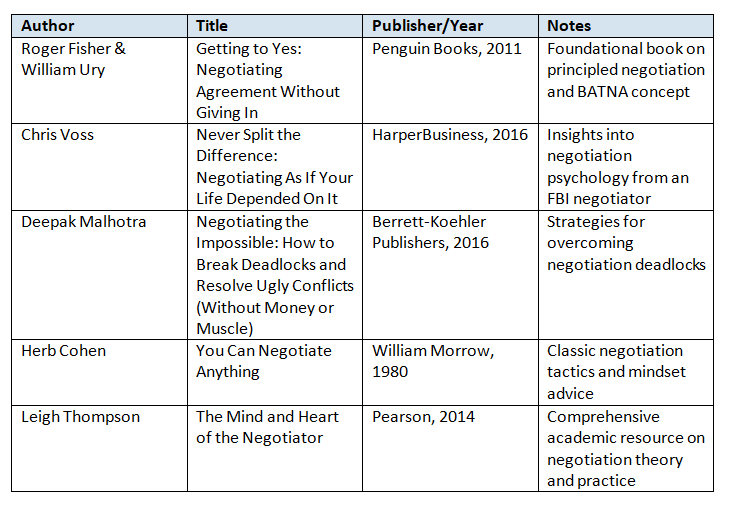
The concept of BATNA, introduced by negotiation experts Roger Fisher and William Ury in “Getting to Yes,” is a critical preparation tool. Your BATNA represents your fallback plan if negotiations fail. Knowing your BATNA empowers you to negotiate from a position of strength and avoid accepting unfavorable terms out of desperation.
For example, if you are negotiating a supply contract, your BATNA might be sourcing from an alternative supplier who offers similar quality at a competitive price. This knowledge helps you identify when to push harder or when to walk away.
Develop a negotiation plan that includes your goals, concessions you are willing to make, and the order in which to address contract terms. Consider using the “Anchor and Adjust” technique, where you set an initial proposal (anchor) that favors your position, anticipating that the final agreement will settle somewhere between your anchor and the counteroffer.
For instance, if you are negotiating payment terms, you might initially propose net 30 days even if you are willing to accept net 45, knowing the other party will likely counter with a longer payment window.
Understanding Key Contract Terms and Clauses
Contracts are composed of various clauses that define the rights and obligations of each party. Mastery over common and critical contract terms enables you to identify areas for negotiation and assess potential risks.
· Payment Terms: Specifies when and how payments are made. Negotiate to align with cash flow needs or incentives for early payment.
· Deliverables and Scope of Work: Clearly defines what is expected. Ambiguity here can lead to disputes; use precise language.
· Term and Termination: Duration of the contract and conditions for ending it. Negotiate reasonable notice periods and termination rights.
· Liability and Indemnity: Addresses who bears risk and financial responsibility. Seek to limit your exposure through caps or exclusions.
· Confidentiality and Non-Disclosure: Protects sensitive information. Ensure terms are mutual and time-bound.
Not all contract terms are equally flexible. Use the “Must-Have vs. Nice-to-Have” framework to prioritize terms. Also, consider the context; for example, standard industry clauses may be less flexible, but payment terms or delivery schedules can often be tailored.
Leveraging Negotiation Techniques and Psychological Principles
Understanding human behavior and negotiation psychology can dramatically improve your effectiveness in contract discussions.
People tend to return favors. Offering a concession on a minor term can encourage the other party to reciprocate with a concession on a more important issue. For example, agreeing to a slightly longer delivery time might lead the supplier to grant a price discount.
The first offer sets the tone of the negotiation. By presenting a strong, well-reasoned opening proposal, you can influence the negotiation range. However, be realistic to maintain credibility.
How you present information affects perception. Instead of saying, “We want to reduce the price by 10%,” frame it as “We seek to align pricing with current market conditions to ensure a sustainable partnership.”
Start by requesting small, easily granted concessions to build momentum before addressing larger terms. For instance, begin by agreeing on the contract’s scope before negotiating payment terms.
“Given our mutual interest in a successful partnership, I’m willing to accommodate a longer warranty period if we can agree on a pricing structure that reflects the volume commitments we discussed.”
Effective Communication and Framing in Negotiations
The way you communicate during negotiations can be as important as the content of what you say.
Demonstrate genuine interest in the other party’s concerns by paraphrasing and summarizing their points. This builds rapport and uncovers underlying interests.
Encourage dialogue by asking questions like, “What are your main priorities in this contract?” or “How do you envision the delivery schedule working?”
Negotiations can become tense. Use techniques such as the “Pause and Breathe” method to stay calm and avoid reactive responses.
Focus on what can be done rather than what cannot. For example, replace “We can’t accept this clause” with “We would be comfortable if we could modify this clause to include…”
Maintain open body language, steady eye contact, and a confident tone to convey sincerity and control.
Negotiation Communication Template[/H3]
· Opening: “Thank you for the opportunity to discuss the contract. We have reviewed the terms and have a few points we'd like to explore to ensure mutual benefit.”
· Proposal: “Regarding the payment terms, we propose net 45 days to accommodate our cash flow cycles.”
· Justification: “This aligns with industry norms and will enable timely delivery and quality assurance.”
· Invitation to Respond: “Could you share your thoughts on this?”
Managing Difficult Negotiations and Overcoming Deadlocks
Not all negotiations proceed smoothly. When faced with resistance or deadlocks, having strategies to manage the situation is essential.
Often, a deadlock arises from unspoken concerns. Use probing questions and empathy to uncover these.
Find creative solutions that satisfy both parties’ core interests. For example, if price is a sticking point, propose extended contract duration or bundled services as trade-offs.
In some cases, involving a neutral third party can facilitate resolution. This could be a mediator or arbitrator with expertise relevant to the contract.
Know your deal breakers but remain open to alternative solutions. For example, if delivery deadline is non-negotiable, perhaps payment terms can be adjusted.
Start with a large request expected to be refused, followed by a smaller, more reasonable request. This can make the second request seem more acceptable.
Closing the Deal: Agreement and Documentation
Closing a contract negotiation is as important as the negotiation itself. Proper closure ensures clarity and prevents future disputes.
Before finalizing, restate the agreed terms to confirm mutual understanding. This can be done verbally and followed by a written summary.
Review the contract document carefully to ensure it reflects all negotiated terms accurately. Ambiguities or omissions can cause problems later.
Track changes visibly so both parties can see modifications. This transparency builds trust and reduces errors.
Agree on who has authority to sign and the timeline for execution. Retain copies of signed contracts securely.
“I’m pleased that we have reached an agreement that works for both of us. To ensure everything is clear, I will send a summary of the key points we discussed. Please review it and let me know if you have any questions before we both sign the final contract.”
Frequently Asked Questions About Contract Negotiation
What is the most important factor to prepare before negotiating contract terms?
The most important factor is understanding your BATNA (Best Alternative to a Negotiated Agreement). Knowing your alternatives gives you the confidence to negotiate effectively and avoid unfavorable terms. Additionally, thoroughly researching the other party’s background, industry standards, and contract specifics is critical.
How can I handle a negotiation when the other party is uncooperative?
When facing an uncooperative party, focus on building rapport through active listening and asking open-ended questions to uncover their interests. If deadlocks persist, consider proposing creative compromises or bringing in a neutral third-party mediator to facilitate the discussion.
Are there standard contract clauses that are typically non-negotiable?
Certain clauses, especially those mandated by law or industry regulations, might be non-negotiable. However, many terms such as payment schedules, deliverables, and warranties are often flexible. It’s essential to identify which clauses are standard and which can be tailored.
How do psychological principles improve negotiation outcomes?
Psychological principles such as reciprocity, anchoring, and framing influence how parties perceive offers and concessions. Using these principles strategically can build trust, encourage concessions, and guide the negotiation toward favorable outcomes.
What is the best way to document negotiated changes?
Use “redline” or track changes features in contract documents to visibly record edits. Follow this with a clear summary of agreed terms and ensure that both parties review and sign the final version to prevent misunderstandings.
Conclusion
Effective negotiation of contract terms requires a blend of preparation, strategic communication, understanding of contract law basics, and psychological savvy. By investing time in research, defining clear objectives, and applying proven negotiation techniques, you can secure agreements that protect your interests and foster productive business relationships.
Remember that negotiation is a dynamic process — patience, flexibility, and professionalism are your allies. Use the tools and examples provided here to approach your next contract negotiation with confidence and control, turning potential conflicts into win-win agreements.
Take the first step today: review your current contract templates and identify areas where negotiation could improve terms. Empower yourself with knowledge and practice these strategies to become a skilled negotiator who consistently achieves favorable contract outcomes.