How to Negotiate in International Business

Successful negotiation is a cornerstone of thriving in international business. However, negotiating across borders introduces unique challenges due to cultural differences, legal environments, communication styles, and varying business customs. Effectively navigating these complexities can mean the difference between closing a lucrative deal and losing valuable opportunities.
Understanding how to negotiate in international business is essential for executives, entrepreneurs, and professionals engaged in global trade and partnerships. This article will equip you with practical strategies, psychological insights, and real-world examples to negotiate effectively across cultures and markets. Whether you are dealing with suppliers in Asia, clients in Europe, or partners in Latin America, mastering these skills will help you build trust, create value, and achieve successful outcomes.
In the following sections, you will learn how to prepare for international negotiations, adapt to cultural nuances, apply proven negotiation techniques, handle conflicts, and close deals with confidence. We will also cover common pitfalls and provide scripts and templates to streamline your negotiation process.
· Table of Contents
· Understanding Cultural Differences in Negotiation
· Preparing for International Negotiations
· Key Negotiation Techniques for Global Business
· Psychological Principles in Cross-Cultural Negotiations
· Managing Communication and Language Barriers
· Conflict Resolution and Building Long-Term Relationships
· Closing Deals and Following Up in International Settings
· Frequently Asked Questions (FAQ)
· Conclusion and Next Steps
Understanding Cultural Differences in Negotiation
Cross-cultural awareness is fundamental when negotiating internationally. Different cultures have distinct communication styles, attitudes towards time, approaches to hierarchy, and decision-making processes that influence negotiation dynamics.
For example, negotiators from Japan or China often emphasize harmony, indirect communication, and relationship building before discussing terms. In contrast, American or German negotiators may prefer directness, efficiency, and quick decision-making. Misinterpreting these cues can lead to misunderstandings or offense.
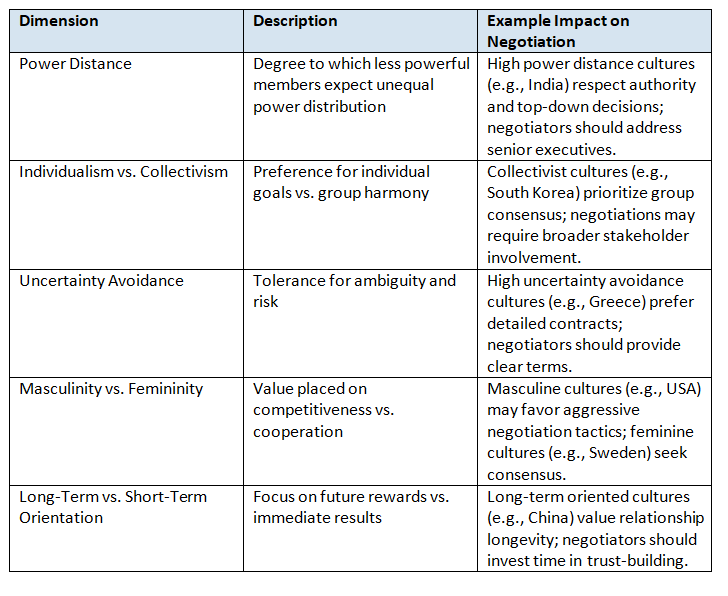
One useful framework for understanding cultural differences is Geert Hofstede’s cultural dimensions theory, which identifies key factors such as:
Practical Tips for Cultural Adaptation
· Research cultural norms, business etiquette, and negotiation styles in advance.
· Engage local cultural advisors or interpreters when possible.
· Observe and mirror counterpart’s communication style subtly.
· Show respect for hierarchy and decision-making protocols.
· Prioritize relationship building, especially in collectivist cultures.
Preparing for International Negotiations
Thorough preparation is the foundation of successful international negotiation. It involves understanding your goals, the counterpart’s interests, the market context, and potential challenges.
Before entering negotiations, identify your desired outcomes and your Best Alternative to a Negotiated Agreement (BATNA). Knowing your BATNA strengthens your position by clarifying when to walk away and when to push harder.
Gather intelligence on the other party’s business history, financial health, negotiation style, and cultural background. For example, learning that a supplier in Brazil values personal relationships can guide your approach towards trust-building activities.
Include culturally knowledgeable individuals, legal experts familiar with international contracts, and translators if necessary. Assign roles such as lead negotiator, financial analyst, and cultural liaison.
Decide on your opening offers, concession limits, and which negotiation tactics to deploy. Preparing multiple scenarios can help you adapt as talks evolve.
Pre-Negotiation Checklist
· Define primary and secondary negotiation goals.
· Identify your BATNA and estimate the counterpart’s BATNA.
· Research cultural, legal, and economic factors.
· Prepare documentation in the counterpart’s language when possible.
· Plan logistics such as venue, timing, and communication channels.
Key Negotiation Techniques for Global Business
International negotiations benefit from a blend of universal and culturally tailored techniques. Employing the right method can help create value and foster long-term partnerships.
Focuses on mutual gains rather than positional bargaining. This approach encourages parties to uncover underlying interests and develop win-win solutions. Fisher and Ury’s “Getting to Yes” method is a classic example.
Setting the first offer or proposal influences the negotiation range. In cultures valuing assertiveness (e.g., the USA), strong anchoring can frame discussions favorably. However, in high-context cultures, aggressive anchoring might backfire.
Echoing the counterpart’s words and demonstrating genuine attention builds rapport and trust. This technique is especially effective in relationship-oriented cultures like Japan and Latin America.
Allowing silence creates pressure for the other party to speak or make concessions. Patience is critical in cultures that view quick decisions as rude or superficial.
Scripts and Templates for Opening Offers
“Based on our market analysis and mutual goals, we propose an initial price of [X]. We believe this reflects the value and long-term potential of our partnership. We are open to discussing terms that accommodate your priorities.”
Psychological Principles in Cross-Cultural Negotiations
Understanding human psychology enhances your ability to influence and persuade international counterparts.
People feel obliged to return favors. Offering small gestures—like sharing market insights or cultural tokens—can build goodwill and encourage concessions.
Demonstrating that others in the counterpart’s industry or region have accepted similar terms can reduce resistance.
Framing proposals in terms of avoiding losses rather than gaining benefits can be more persuasive, especially in risk-averse cultures.
How information is presented impacts decisions. For example, emphasizing quality and safety in negotiations with European partners may be more effective than focusing solely on cost.
As noted earlier, the first number or offer sets a mental benchmark influencing subsequent decisions.
Applying the Principle of “Face” in Asian Negotiations
In many Asian cultures, “saving face” or preserving dignity is paramount. Avoid direct criticism or confrontation. Instead, use indirect language or third-party mediation to address sensitive issues.
Managing Communication and Language Barriers
Language differences and communication styles can complicate international negotiations.
Avoid relying solely on bilingual team members to prevent misunderstandings. A professional interpreter familiar with business terminology ensures accuracy.
Use clear, concise language and avoid slang or cultural references that may confuse the other party.
Be aware of gestures, eye contact, and body language, which vary widely across cultures. For instance, prolonged eye contact is respectful in Western cultures but can be confrontational in some Asian cultures.
Periodically summarize key points and ask for confirmation to ensure alignment.
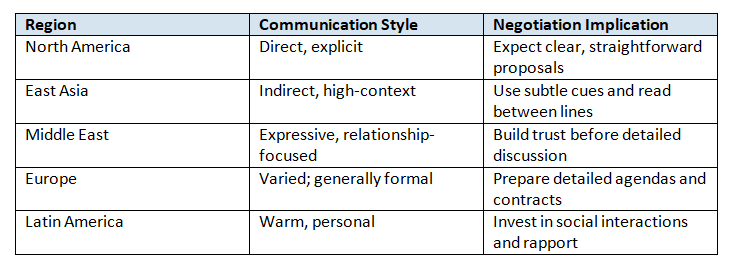
Communication Styles by Region
Conflict Resolution and Building Long-Term Relationships
International business is not just about closing deals but fostering sustainable partnerships. Handling conflicts constructively is vital.
View disagreements as chances to clarify interests and strengthen collaboration.
Neutral mediators can bridge cultural and legal gaps, especially in complex disputes.
Avoid escalating tensions with emotional reactions or public criticism.
Regular communication, honoring commitments, and cultural exchanges build trust over time.
Example Conflict Resolution Script
“We appreciate your perspective and want to ensure we find a solution that respects both our interests. Could we explore alternative options together or consider involving a neutral expert to assist us?”
Closing Deals and Following Up in International Settings
The final stages of negotiation require clarity, documentation, and ongoing engagement.
Draft clear contracts detailing responsibilities, timelines, payment terms, and dispute resolution mechanisms. Use bilingual documents when appropriate.
International deals may require amendments due to regulatory or market changes. Build flexible clauses where possible.
Establish checkpoints and communication protocols to track progress.
Send thank-you notes or host follow-up meetings to solidify trust.
Frequently Asked Questions (FAQ)
What is the biggest challenge in negotiating internationally?
The biggest challenge is navigating cultural differences that affect communication, trust-building, and decision-making. Misunderstandings can derail negotiations if parties are not culturally sensitive.
How can I overcome language barriers in international negotiations?
Use professional interpreters, simplify your language, avoid idioms, and confirm understanding frequently. Preparing bilingual documents and training your team in cross-cultural communication also help.
Should negotiation tactics differ by country?
Yes. Effective tactics consider cultural norms, such as directness, formality, and time orientation. For instance, hard bargaining may work in some Western contexts but offend counterparts in Asia where harmony is valued.
How important is relationship building in international business deals?
It is often critical, especially in collectivist and high-context cultures. Investing time in social interactions, trust-building, and respecting local customs can lead to stronger, longer-lasting partnerships.
What role does legal knowledge play in international negotiations?
An essential one. Understanding local laws, contract enforceability, and dispute resolution mechanisms prevents costly mistakes. Working with local legal experts is highly recommended.
Conclusion
Negotiating in international business demands more than just sound tactics; it requires cultural intelligence, psychological insight, and strategic preparation. By understanding your counterpart’s cultural context, preparing meticulously, employing the right negotiation techniques, and managing communication effectively, you can confidently navigate complex global deals.
Embrace the mindset of collaboration and long-term relationship building to turn negotiations into lasting partnerships that drive global success. Start applying these principles today to elevate your international negotiation skills and unlock new business opportunities worldwide.
References
· Fisher, R., Ury, W., & Patton, B. (2011). Getting to Yes: Negotiating Agreement Without Giving In. Penguin Books.
· Hofstede, G., Hofstede, G. J., & Minkov, M. (2010). Cultures and Organizations: Software of the Mind. McGraw-Hill Education.
· Lewicki, R. J., Barry, B., & Saunders, D. M. (2015). Negotiation. McGraw-Hill Education.
· Brett, J. M. (2014). Negotiating Globally: How to Negotiate Deals, Resolve Disputes, and Make Decisions Across Cultural Boundaries. Jossey-Bass.
· Mayer, B. (2012). The Dynamics of Conflict: A Guide to Engagement and Intervention. Jossey-Bass.