How to Negotiate Renewals with Existing Clients

In today’s hyper-competitive B2B landscape, retaining existing clients is often more profitable than acquiring new ones. Imagine your enterprise software client’s contract is nearing expiration, and the renewal decision will influence your annual revenue target significantly. Yet, your competitor is aggressively pitching a lower-cost alternative. How do you strategically negotiate the renewal to not only retain the client but also potentially expand the deal?
Mastering renewal negotiations in B2B with existing clients is a critical skill for sales leaders, account managers, and procurement professionals alike. Renewals provide a unique opportunity to deepen client relationships, upsell additional services, and solidify long-term partnerships. However, without a structured approach, renewal discussions can become transactional, resulting in missed revenue, commoditization, or even churn.
This comprehensive guide will equip you with actionable strategies, psychological techniques, and proven frameworks to negotiate renewals effectively. You will learn how to prepare thoroughly, manage client objections, apply negotiation tactics such as BATNA and anchoring, and measure success with relevant KPIs. Whether you are in SaaS, professional services, or manufacturing, these insights will empower you to close renewal deals with confidence and maximize client lifetime value.
· Table of Contents
· Understanding the Importance of Renewal Negotiations
· Preparing for Renewal Discussions: Research and Analysis
· Key Negotiation Strategies for Renewal Success
· Effective Communication and Negotiation Scripts
· Handling Objections and Competitive Threats
· Measuring and Tracking Renewal Negotiation Performance
· Frequently Asked Questions
· Conclusion
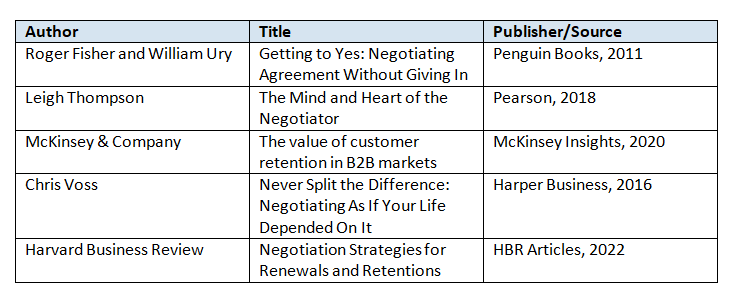
· References
Understanding the Importance of Renewal Negotiations
Renewals represent a critical revenue stream in B2B sales, often accounting for 60-80% of annual revenue in subscription-based or contract-driven industries. Unlike new sales, renewal negotiations leverage an existing relationship and a history of delivered value. However, the stakes remain high: clients are continuously evaluating ROI and alternatives.
A McKinsey study revealed that increasing client retention rates by 5% can boost profits by 25% to 95%. This statistic underscores why renewal negotiations are not just an administrative step but a strategic revenue opportunity. Successful renewal negotiations secure predictable revenue streams, reduce customer acquisition costs, and open doors for upselling or cross-selling.
From a psychological perspective, renewal discussions tap into concepts like loss aversion — clients often weigh the pain of switching or losing service against the incremental cost of renewal. Understanding this helps negotiators frame value effectively. Also, the principle of reciprocity can be leveraged by highlighting past successes and mutual commitments, increasing the likelihood of renewal agreement.
In practice, companies such as Salesforce and Adobe have built renewal teams focused exclusively on proactive engagement months before contract expiration. They use data analytics to predict churn risk and tailor negotiation approaches accordingly. This proactive stance contrasts with reactive last-minute renewal asks that often result in price discounting or client dissatisfaction.
Preparing for Renewal Discussions: Research and Analysis
Preparation is the cornerstone of successful renewal negotiation. It requires a detailed understanding of the client’s business context, contract history, usage data, and competitive landscape.
First, conduct a comprehensive account review: analyze previous contract terms, service delivery metrics, support tickets, and any escalations. This data helps identify value delivered and areas for improvement. For example, if a client’s usage of a SaaS product has increased 30% year-over-year, this creates a strong upsell argument.
Second, map out the client’s business goals and industry challenges. Are they expanding geographically? Undergoing digital transformation? Such insights enable you to propose tailored solutions that align with their evolving needs.
Third, evaluate your Best Alternative to a Negotiated Agreement (BATNA). Knowing your fallback position if the client declines renewal or demands steep concessions is vital. Conversely, estimate the client’s BATNA by researching competitors’ offerings and pricing. This understanding helps define the Zone of Possible Agreement (ZOPA) — the realistic negotiation range.
Fourth, prepare a value-based renewal proposal that clearly articulates ROI, referencing specific KPIs or case studies. Avoid generic pricing discussions; instead, focus on outcomes relevant to the client’s objectives.
Finally, coordinate internally with legal, finance, and delivery teams to ensure alignment on permissible contract terms, pricing flexibility, and service commitments. Establish who will participate in negotiation calls and their roles.
Preparation Checklist for Renewal Negotiations
· Review contract usage, delivery metrics, and client feedback
· Research client’s current business priorities and challenges
· Identify client’s and your BATNA and define ZOPA
· Develop a value-based renewal proposal with ROI metrics
· Align with internal stakeholders on negotiation parameters
Key Negotiation Strategies for Renewal Success
Applying structured negotiation frameworks during renewal discussions enhances outcomes. Here are several advanced strategies proven effective in B2B renewal contexts:
Start the negotiation by anchoring the discussion around the value delivered rather than just price. For example, present a case study showing how your solution reduced the client’s operational costs by 15%, justifying a modest price increase aligned with inflation or added features. Anchors set expectations and influence perceived deal fairness.
Use your knowledge of BATNA and ZOPA to navigate concessions. If your client’s competitor offers a lower price but lacks certain capabilities, emphasize your differentiated value and be prepared to adjust pricing within the ZOPA without eroding margins. This approach avoids conceding too much too soon.
Begin by securing agreement on smaller contract elements (e.g., extended support hours) before moving to more significant terms like pricing or contract length. This incremental agreement builds momentum and commitment.
Adopt a partnership mindset by framing the renewal as a joint effort to achieve mutual goals. Use open-ended questions to uncover client concerns and co-create solutions, which increases client buy-in and reduces adversarial dynamics.
Initiate renewal discussions well in advance (typically 90-120 days before expiration). This timing allows for iterative dialogue, addressing concerns early, and reduces pressure that leads to rushed or suboptimal decisions.
Engage multiple stakeholders within the client organization (procurement, end-users, executives) to build consensus and reduce risk of last-minute objections. Tailor messaging to each stakeholder’s priorities.
Example Negotiation Dialogue Using Anchoring and BATNA
Sales Rep: “Over the past year, our platform helped your team reduce processing time by 20%, saving an estimated $250,000. Given this impact, we propose a renewal at a 5% increase, reflecting new features added.”
Client: “Another vendor offers a comparable product at 10% less.”
Sales Rep: “I understand. However, unlike them, we provide dedicated 24/7 support and advanced analytics that have been critical to your recent operations improvements. Would you be open to discussing how we can tailor the package to meet both your budget and performance needs?”
Effective Communication and Negotiation Scripts
Clear, confident communication is essential during renewal negotiations. Using tested scripts can structure conversations, manage objections, and maintain professionalism.
· Opening the Renewal Conversation
“Hi [Client Name], as your contract renewal approaches, I wanted to schedule time to review how our solutions have supported your business goals over the past term and discuss how we can continue driving value together.”
· Presenting the Value Proposition
“Based on usage data and your feedback, we’ve seen [specific results]. Continuing with our solution will help you achieve [client-specific objectives], and we have several enhancements planned that align with your roadmap.”
· Addressing Price Increases
“We recognize the importance of budgeting and have structured this renewal to reflect both market conditions and the additional value delivered. We’re open to exploring options to ensure this remains a strong investment for your team.”
· Handling Objections
Client: “The price increase is higher than expected.”
Response: “I appreciate that concern. Could you share more about your budget constraints? Perhaps we can explore adjusting service levels or payment terms to better fit your needs.”
· Closing the Renewal
“Based on our discussion, are you comfortable moving forward with the proposed terms? If you’d like, I can prepare the updated contract for your review and address any remaining questions.”
Handling Objections and Competitive Threats
Objections during renewals often revolve around price, value perception, or competitive offers. Addressing these effectively requires empathy, data-driven responses, and strategic concessions.
· Common Renewal Objections
· “The price is too high compared to competitors.”
· “Our usage hasn’t justified the current spend.”
· “We’re considering switching vendors.”
· “We need more flexible contract terms.”
· “The ROI hasn’t met expectations.”
For each objection, apply the following tactics:
Acknowledge the client’s perspective to build trust. Example: “I understand budget pressures are challenging this year.”
Use data, case studies, or testimonials to reinforce value. Example: “Our analytics show your team’s productivity increased 18% using our system.”
Ask probing questions: “What specific outcomes would you like to see improved?”
Propose service adjustments, phased pricing, or bundled packages that meet client needs without full discounting.
If a competitor is involved, highlight unique differentiators or risks of switching, such as migration costs or service disruptions.
Scenario: Overcoming a Competitive Threat
A manufacturing client is considering a lower-priced competitor offering similar machinery maintenance contracts.
The renewal manager responds by:
· Presenting documented uptime improvements and cost savings from their service.
· Offering a customized support package with faster response times.
· Explaining the risks and downtime associated with vendor changes.
· Proposing a multi-year renewal with price caps to provide budget stability.
This multi-pronged approach reassures the client and shifts focus from price alone to total value.
Measuring and Tracking Renewal Negotiation Performance
Effective renewal processes are data-driven. Tracking key metrics identifies improvement areas and drives accountability.
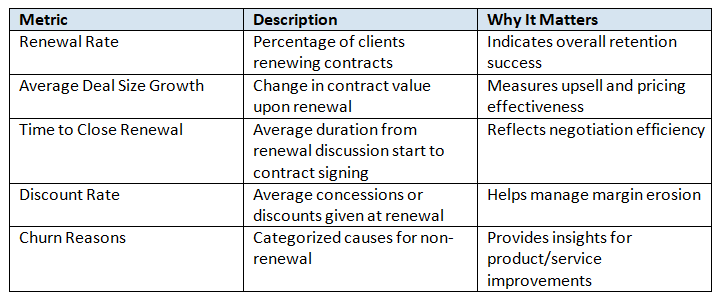
Regularly reviewing these metrics enables sales leaders to refine negotiation strategies. For example, a high discount rate coupled with stagnant average deal size may signal weak value positioning. Similarly, longer time-to-close may suggest process bottlenecks or insufficient preparation.
Salesforce, for instance, employs CRM dashboards to monitor renewal KPIs in real-time, triggering alerts for at-risk accounts. This proactive approach facilitates targeted interventions before contract expiration.
Frequently Asked Questions
1. When should I start renewal negotiations with an existing client?
Best practice is to initiate renewal discussions 90 to 120 days prior to contract expiration. This timeline allows for comprehensive review, addressing client concerns proactively, and avoids last-minute pressure that can lead to undesirable concessions.
2. How do I handle a client who demands a price reduction during renewal?
Start by understanding their rationale—budget cuts, competitor offers, or perceived value gaps. Reinforce your solution’s ROI with data, and explore alternative options such as adjusting service levels, extending contract length for better pricing, or offering bundled services rather than blanket discounts.
3. What negotiation frameworks are most effective for renewal discussions?
Frameworks like BATNA (Best Alternative to a Negotiated Agreement), ZOPA (Zone of Possible Agreement), and anchoring techniques are highly effective. BATNA helps define your fallback; anchoring sets the initial price expectation; ZOPA identifies the acceptable negotiation range.
4. How can I reduce churn risk during renewal negotiations?
Multi-thread communication with various client stakeholders, proactive engagement well before renewal, and continuous value demonstration throughout the contract term reduce churn risk. Also, addressing objections empathetically and offering flexible terms tailored to client needs helps retain customers.
5. What role does contract length play in renewal negotiations?
Longer contract terms can secure revenue predictability and may justify pricing incentives. However, clients often seek flexibility. Offering options such as multi-year agreements with performance clauses or renewal options balances security with client comfort.
Conclusion
Negotiating renewals with existing clients is an intricate yet rewarding process that demands preparation, strategic acumen, and excellent communication. By understanding your client’s business context, leveraging negotiation frameworks like BATNA and anchoring, and addressing objections with empathy and data, you can transform renewals into growth opportunities rather than mere administrative renewals.
Implementing the tactics outlined — from early engagement to multi-stakeholder communication and rigorous performance tracking — will enhance your ability to retain clients, increase deal size, and reduce churn. As competition intensifies in the B2B market, mastering renewal negotiations is essential to sustaining revenue and building lasting partnerships.
Take the next step by reviewing your renewal pipeline and applying these strategies systematically. Equip your teams with negotiation training and data tools to elevate your renewal success rates consistently.