Listening Skills in Negotiation: The Key to Successful Outcomes

In an era defined by rapid communication and complex interactions, the art of listening remains one of the most undervalued yet powerful negotiation skills. Effective listening in negotiation transcends mere hearing; it involves understanding, empathizing, and responding to the underlying interests and emotions of all parties involved. As negotiations grow more sophisticated and stakes rise—from corporate mergers to international diplomacy—the ability to listen actively can differentiate between stalemate and breakthrough.
Why does listening matter so much today? Modern negotiations often involve multiple stakeholders, cultural nuances, and high emotional volatility. Without strong listening skills, negotiators risk overlooking critical information, misinterpreting intentions, or escalating conflicts unnecessarily. By mastering listening, negotiators unlock deeper insights, build trust, and pave the way for creative, mutually beneficial solutions.
This comprehensive guide will explore the psychological foundations of listening in negotiation, practical strategies to enhance listening effectiveness, and exercises designed to sharpen this indispensable skill. Whether you are a seasoned executive, a sales professional, or an aspiring negotiator, this article will equip you with actionable tools to transform your negotiation outcomes through superior listening.
· Table of Contents
· The Psychology Behind Listening in Negotiation
· Active Listening Techniques: Theory and Application
· Emotional Intelligence and Listening: Reading Between the Lines
· Overcoming Common Listening Barriers in Negotiations
· Practical Exercises to Enhance Listening Skills
· Real-World Examples: Listening in High-Stakes Negotiations
· Frequently Asked Questions
· Conclusion
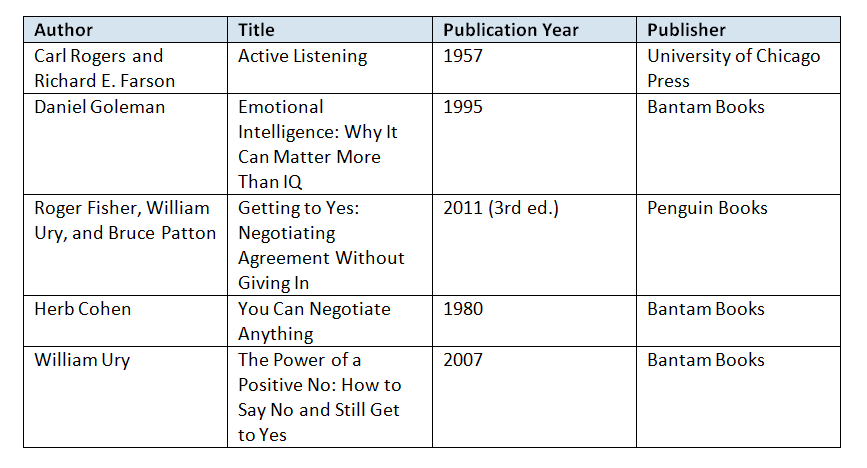
· References
The Psychology Behind Listening in Negotiation
Listening is not a passive process; it is an active cognitive and emotional engagement that requires attention, interpretation, and response. Psychologist Carl Rogers pioneered the concept of *active listening*, emphasizing empathetic understanding as critical for effective communication. In negotiation, this translates to listening not just for words, but for emotions, intentions, and unspoken concerns.
The *Transactional Model of Communication* highlights that messages are encoded, transmitted, received, and decoded, with noise and feedback loops affecting clarity. Recognizing these elements helps negotiators understand why listening often fails and how to mitigate misunderstandings.
Another relevant psychological framework is *Theory of Mind*, which refers to the ability to attribute mental states—beliefs, intents, desires—to others. Skilled negotiators use this to anticipate counterparts' needs and adapt their listening approach accordingly.
· Key psychological principles relevant to listening in negotiation:
· Active Listening (Carl Rogers)
· Theory of Mind
· Transactional Model of Communication
· Emotional Intelligence (Daniel Goleman)
By grasping these fundamentals, negotiators can appreciate listening as a strategic tool rather than a passive skill.
Active Listening Techniques: Theory and Application
Active listening involves fully concentrating, understanding, responding, and then remembering what is being said. It requires negotiators to suspend judgment, avoid interruptions, and provide feedback that demonstrates comprehension.
Key components of active listening include:
· Paraphrasing: Restating the speaker's message in your own words to confirm understanding.
· Reflecting Feelings: Acknowledging the speaker's emotions to validate their experience.
· Clarifying Questions: Asking open-ended questions to deepen insight.
· Summarizing: Periodically reviewing key points to ensure alignment.
For example, in a salary negotiation, instead of immediately countering an offer, a negotiator might say, "It sounds like you value both compensation and work-life balance highly. Can you tell me more about what work-life balance means for you in this role?" This invites deeper dialogue and uncovers underlying interests.
Practical Script for Active Listening in Negotiation
1. Listen Without Interrupting: Allow the speaker to express fully.
2. Paraphrase: "So what you're saying is..."
3. Reflect Emotions: "It seems like you're concerned about..."
4. Ask Clarifying Questions: "Could you explain what you mean by..."
5. Summarize: "To make sure I understand, your main priorities are..."
Using such scripts helps embed active listening into negotiation habits.
Emotional Intelligence and Listening: Reading Between the Lines
Emotional Intelligence (EI) encompasses the abilities to recognize, understand, and manage one’s own emotions and those of others. Daniel Goleman's EI framework identifies five components: self-awareness, self-regulation, motivation, empathy, and social skills. Among these, empathy is directly linked to effective listening.
In negotiation, empathic listening allows one to detect subtle emotional cues—tone of voice, facial expressions, body language—that reveal more than words alone. For instance, a negotiator noticing hesitation or discomfort can explore these feelings gently, which often uncovers hidden objections or concerns.
Moreover, self-regulation helps negotiators manage their emotional reactions to provocative statements, preventing defensiveness that blocks effective listening. By practicing EI, negotiators create an atmosphere of psychological safety, encouraging openness and trust.
Exercise: Emotional Labeling to Improve Empathic Listening
During negotiation practice sessions, participants can:
· Note emotions they perceive in the counterpart's speech or behavior.
· Verbally label these emotions ("You seem frustrated about the timeline").
· Observe how this influences the counterpart’s openness.
This exercise enhances emotional attunement and deepens listening effectiveness.
Overcoming Common Listening Barriers in Negotiations
Even experienced negotiators struggle with barriers that impair listening, including:
· Confirmation Bias: Only hearing information that supports pre-existing beliefs.
· Selective Attention: Focusing on certain words while ignoring others.
· Emotional Reactivity: Responding emotionally rather than objectively.
· Distractions: Environmental or internal interruptions.
Understanding these barriers allows negotiators to implement strategies to overcome them. For example, to counter confirmation bias, negotiators can deliberately seek disconfirming evidence by asking, "What concerns might you have about this proposal?" This opens space for alternative views.
Mindfulness training can reduce emotional reactivity by enhancing present-moment awareness, making negotiators less likely to jump to conclusions or interrupt.
Table: Common Listening Barriers and Mitigation Strategies
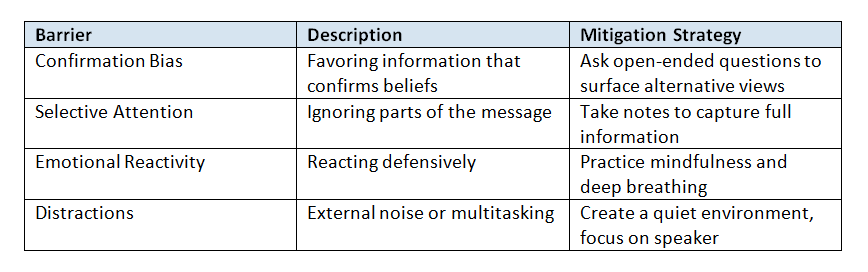
Proactively addressing these barriers strengthens negotiation listening outcomes.
Practical Exercises to Enhance Listening Skills
Developing superior listening skills requires intentional practice. Below are exercises proven effective in negotiation training programs:
· Role-Playing with Feedback: Simulate negotiation scenarios emphasizing active listening. Peers provide feedback on listening behaviors.
· Reflective Journaling: After real negotiations, write reflections on listening successes and challenges.
· Mindfulness Meditation: Daily practice improves focus and emotional regulation.
· Mirroring Technique: Subtly imitate counterpart’s verbal and nonverbal cues to build rapport and enhance attention.
· Listening Logs: Track instances of interruptions or assumptions during conversations and work to reduce them.
For instance, in a workshop with a Fortune 500 sales team, role-playing exercises focusing on paraphrasing and emotional labeling increased their deal closure rate by 15% within three months, according to internal metrics.
Real-World Examples: Listening in High-Stakes Negotiations
Consider the historic 1986 Reykjavik Summit between Ronald Reagan and Mikhail Gorbachev. Despite initial disagreements, both leaders’ willingness to listen deeply, acknowledge underlying fears, and explore mutual interests laid groundwork for later arms reduction treaties.
In business, Amazon’s Jeff Bezos emphasizes customer-centric listening as a core negotiation and decision-making tool. By focusing on customer feedback and deeply understanding needs, Amazon negotiates supplier agreements that align incentives and foster long-term partnerships.
Closer to sales negotiations, the *BATNA* (Best Alternative to a Negotiated Agreement) concept is enhanced by listening carefully to counterpart’s alternatives and constraints. For example, a procurement manager listening to a supplier’s capacity limitations can negotiate better delivery terms rather than price concessions alone.
These examples illustrate how listening enables negotiators to access critical information, build trust, and craft innovative solutions.
Frequently Asked Questions
1. How can I improve my listening skills specifically for negotiation?
Improvement begins with awareness: recognize your listening habits and common distractions. Practice active listening techniques, such as paraphrasing and asking clarifying questions. Incorporate emotional intelligence by observing nonverbal cues and managing your emotional responses. Regular role-playing and mindfulness exercises reinforce these skills over time.
2. What is the difference between hearing and listening in negotiation?
Hearing is the passive perception of sound, while listening is an active process involving attention, interpretation, and understanding. In negotiation, listening requires cognitive engagement to decode messages, emotions, and underlying interests, which hearing alone cannot achieve.
3. How does emotional intelligence enhance listening during tough negotiations?
Emotional intelligence allows negotiators to detect emotions in themselves and others, fostering empathy and reducing reactive behavior. This creates trust and openness, enabling deeper listening and more accurate interpretation of the counterpart’s motivations and concerns.
4. Can listening skills help when negotiating across cultures?
Absolutely. Cultural differences often manifest in indirect communication styles, nonverbal cues, and implicit expectations. Effective listening, combined with cultural sensitivity, helps negotiators decode these subtleties, avoid misunderstandings, and build rapport across cultural divides.
5. How do I handle situations where the other party is not listening?
Maintain your composure and model good listening behavior yourself. Use reflective statements to demonstrate understanding and encourage reciprocation. If interruptions occur, calmly request the chance to finish. Sometimes, explicitly discussing communication norms at the start of negotiation can set mutual expectations.
Conclusion
Listening is the cornerstone of successful negotiation. By integrating psychological insights, active listening techniques, emotional intelligence, and practical exercises, negotiators can transform conversations into collaborative problem-solving sessions. The ability to listen deeply uncovers hidden interests, diffuses tension, and builds durable agreements that satisfy all parties.
As you embark on refining your listening skills, remember that mastery requires consistent practice and self-awareness. Begin applying these strategies in your next negotiation to experience improved outcomes and stronger relationships. Commit today to becoming a better listener and watch your negotiation effectiveness soar.