Negotiating Long-Term Contracts in B2B

In today’s rapidly evolving business landscape, securing long-term contracts is a critical strategy for B2B companies aiming to lock in revenue streams, foster strategic partnerships, and gain competitive advantages. Imagine a scenario where a procurement manager at a global manufacturing firm negotiates a five-year supply agreement with a key raw materials provider. The terms they settle on will not only impact cost structures but also influence supply chain resilience and innovation collaboration for years to come.
With increasing market volatility, inflationary pressures, and shifting buyer expectations, the stakes for negotiating long-term contracts have never been higher. Companies must balance the desire for price stability with flexibility provisions that accommodate future market changes. This pillar page will guide you through expert strategies, negotiation frameworks, and actionable tactics to effectively negotiate long-term B2B contracts that create mutual value and mitigate risks.
You will learn how to prepare using robust data analysis, apply negotiation psychology principles such as anchoring and BATNA, leverage contract structure to align incentives, and measure success with relevant KPIs. Whether you are a sales leader, procurement professional, or legal advisor, this comprehensive guide delivers the insights needed to master the art and science of long-term B2B contract negotiation.
· Table of Contents
· Understanding the Strategic Importance of Long-Term B2B Contracts
· Preparation: Research, BATNA, and Setting Objectives
· Core Negotiation Frameworks and Techniques
· Structuring Contracts for Flexibility and Value Sharing
· Communication Strategies and Negotiation Scripts
· Measuring Success and Managing Contract Performance
· Frequently Asked Questions
· Conclusion and Next Steps
· References
Understanding the Strategic Importance of Long-Term B2B Contracts
Long-term contracts in B2B settings are far more than simple procurement agreements; they are strategic tools that can influence market positioning, operational efficiency, and innovation pathways. For example, a technology firm might enter a multi-year partnership with a cloud service provider not only to secure favorable pricing but also to co-develop new capabilities and gain priority access to emerging technologies.
One critical reason long-term contracts matter is the predictability they offer. For suppliers, guaranteed volume commitments reduce revenue volatility and justify investment in capacity and quality improvements. Buyers benefit from price stability, reduced transaction costs, and stronger supplier collaboration. However, these benefits come with risks such as market shifts, supplier dependency, and potential lock-ins.
In this context, understanding the strategic value helps negotiators align contract terms with broader corporate objectives such as risk mitigation, innovation enablement, and cost containment. For instance, a Fortune 500 logistics company might negotiate clauses allowing for volume adjustments tied to market demand fluctuations, balancing commitment with flexibility.
· Key strategic considerations include:
· Aligning contract duration with business planning cycles
· Balancing exclusivity and competitive sourcing
· Incorporating innovation and continuous improvement commitments
· Managing risk through termination and force majeure clauses
· Leveraging contracts as partnership frameworks rather than transactional documents
Preparation: Research, BATNA, and Setting Objectives
Preparation is the cornerstone of successful long-term contract negotiation. It begins with thorough market research and internal alignment on objectives. This phase leverages quantitative data such as historical pricing, volume forecasts, supplier performance metrics, and industry benchmarks.
A critical tool here is the BATNA — Best Alternative To a Negotiated Agreement. Knowing your BATNA empowers negotiators to avoid unfavorable terms by understanding their fallback options. For example, a manufacturing company may have alternative suppliers, but switching costs and quality risks shape the strength of their BATNA.
Setting clear, prioritized objectives prevents scope creep and facilitates trade-offs during negotiations. Objectives typically include price targets, service-level agreements (SLAs), delivery schedules, and innovation commitments. Using the SMART criteria (Specific, Measurable, Achievable, Relevant, Time-bound) ensures clarity.
Research Techniques and Data Sources
· Internal spend analysis and supplier scorecards
· Market intelligence reports and industry pricing indices
· Competitive benchmarking with peer companies
· Legal and regulatory environment review
Defining Your BATNA
Understanding BATNA involves:
· Identifying alternative suppliers or solutions
· Calculating switching costs and impact
· Assessing time required to execute alternatives
· Evaluating risks associated with alternatives
Objective Setting Framework
Use a tiered goal system:
· Must-haves: Non-negotiable terms (e.g., compliance)
· Nice-to-haves: Preferable but negotiable terms (e.g., volume discounts)
· Trade-offs: Terms open for concession (e.g., contract length)
This disciplined preparation lays the foundation for informed, confident negotiation.
Core Negotiation Frameworks and Techniques
Mastering negotiation frameworks is essential to navigate complex B2B long-term contracts. The Zone of Possible Agreement (ZOPA) concept defines the overlap between buyer and seller acceptable terms. Identifying ZOPA early helps focus on realistic outcomes.
Anchoring is a powerful psychological technique where the first offer sets a reference point. In B2B long-term contracts, anchoring can influence price expectations and contract scope. For instance, a supplier may anchor with a high initial price but offer volume discounts to shift perceived value.
Integrative negotiation strategies aim for win-win outcomes, expanding the pie rather than dividing it. This approach emphasizes collaboration, exploring interests beyond price such as quality, delivery flexibility, and innovation sharing.
Applying BATNA, ZOPA, and Anchoring
· BATNA: Know when to walk away to preserve value
· ZOPA: Narrow down realistic deal boundaries
· Anchoring: Use data-backed proposals to set favorable reference points
The Harvard Negotiation Project’s Principled Negotiation
This framework focuses on:
· Separating people from the problem — avoid emotional conflicts
· Focusing on interests, not positions — uncover underlying needs
· Generating options for mutual gain — brainstorm solutions
· Insisting on objective criteria — use data and standards
Real-World Script Example: Opening Offer Dialogue
Supplier: “Based on our cost models and market trends, we propose a base price of $10 per unit for a five-year contract, with an annual adjustment tied to the Producer Price Index. We believe this pricing reflects both stability and fairness.”
Buyer: “Thank you for the proposal. Considering our volume commitments and partnership potential, we were expecting a base price closer to $8.50, with flexibility around adjustment mechanisms. Could we explore options that meet both our expectations?”
This exchange illustrates anchoring and interest-based negotiation in practice.
Structuring Contracts for Flexibility and Value Sharing
Long-term agreements must balance firm commitments with flexibility to adapt to market changes. Contract structure governs how risks and rewards are shared, influencing long-term partnership success.
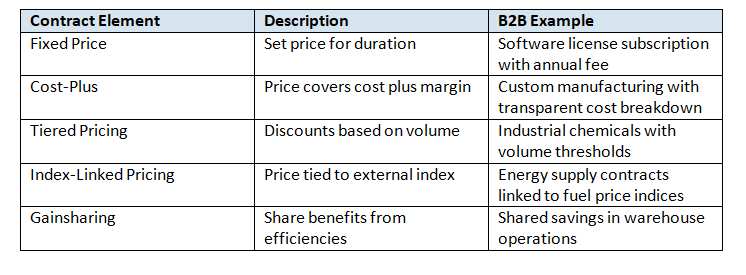
Key elements include pricing models, volume commitments, performance metrics, escalation clauses, and termination rights. For example, a tiered pricing model incentivizes higher volume purchases while protecting the buyer from overcommitment.
Value-sharing mechanisms such as gain-sharing or cost-saving sharing encourage continuous improvement. For instance, a logistics provider and client may agree to share savings generated through process optimizations enabled by the contract.
Common Contract Structures
Flexibility Clauses to Include
· Price adjustment formulas tied to objective indices
· Volume flexibility windows with minimum/maximum thresholds
· Termination rights for force majeure or poor performance
· Review and renegotiation intervals
· Innovation collaboration provisions with IP rights management
Risk Mitigation via Contract Terms
Including indemnities, warranties, and liquidated damages clauses protects both parties. For example, a multi-year software support contract may include service level credits for downtime exceeding agreed thresholds.
Communication Strategies and Negotiation Scripts
Effective communication drives trust and clarity during long-term contract negotiations. Active listening, open-ended questions, and empathy help uncover interests and reduce conflicts.
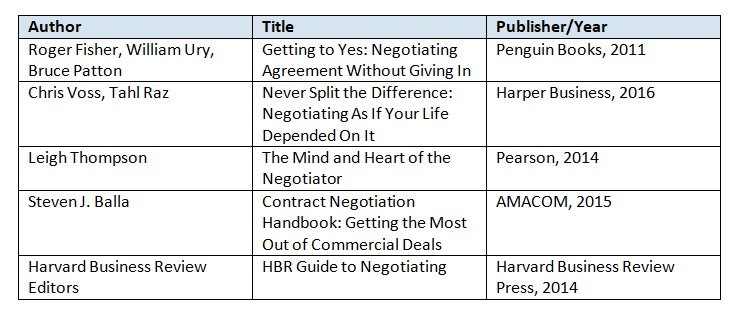
The use of calibrated questions from Chris Voss’s “Never Split the Difference” can reveal constraints and priorities. For example, “How can we work together to address your volume uncertainty?” invites collaborative problem-solving.
Scripts should be adaptable, focusing on collaborative language rather than adversarial tones. Below is a sample script for managing price pushback:
Price Pushback Script Example
Buyer: “The proposed price exceeds our budget for a long-term commitment.”
Supplier: “I understand budget constraints. Could you share more about your cost expectations and how we might structure terms to meet them while maintaining service quality?”
Buyer: “We are targeting a price closer to $X, but also value innovation and reliability.”
Supplier: “Let’s explore a tiered pricing model with volume incentives and periodic reviews to balance price and value over time. Would that address your concerns?”
This dialogue employs empathy, open-ended questions, and problem-solving.
· Communication best practices:
· Maintain transparency on constraints and priorities
· Use data to support proposals and concessions
· Avoid ultimatums; focus on mutual gain
· Document agreements promptly to prevent misunderstandings
Measuring Success and Managing Contract Performance
Negotiation ends when signatures are on the contract, but success requires ongoing management and measurement. Defining KPIs aligned to contract objectives ensures accountability.
Typical KPIs include:
· Cost savings versus baseline spend
· On-time delivery rates
· Quality defect rates
· Innovation milestones achieved
· Customer satisfaction scores
Contract governance mechanisms such as regular review meetings, escalation paths, and continuous improvement programs maintain alignment. For example, a multinational corporation may institute quarterly business reviews with suppliers to monitor performance and identify improvement opportunities.
Tools for Contract Performance Management
· Contract lifecycle management (CLM) software
· Supplier scorecards and dashboards
· Automated alerts for renewal and compliance dates
· Data analytics for spend and performance trends
Escalation and Dispute Resolution
In long-term relationships, disagreements may arise. Including clear escalation paths and dispute resolution clauses such as mediation or arbitration prevents costly litigation.
Frequently Asked Questions
1. How long should a long-term B2B contract typically be?
The ideal duration depends on industry dynamics, product lifecycle, and strategic goals. Common terms range from 3 to 5 years, balancing commitment with flexibility. For rapidly evolving sectors like technology, shorter terms with renewal options may be advisable, while stable industries such as raw materials may favor longer durations.
2. What are the best pricing models for long-term contracts?
Pricing models should align incentives and manage risk. Fixed pricing offers predictability but may expose suppliers to cost inflation. Index-linked or cost-plus models share risks transparently. Tiered pricing incentivizes volume growth. Hybrid models combining these elements often work best, tailored to the specific relationship.
3. How can negotiators handle uncertainty in volume forecasts?
Including volume flexibility clauses with minimum and maximum thresholds, option to adjust forecasts at defined intervals, and penalties or incentives based on adherence can mitigate risks. Scenario planning during negotiation helps establish realistic expectations.
4. What role does legal counsel play in B2B negotiation?
Legal counsel ensures compliance with regulations, assesses risk exposure, drafts contract language, and advises on enforceability. Their involvement should complement commercial negotiation teams to balance legal protection with business objectives.
5. How can companies maintain strong supplier relationships post-contract?
Transparent communication, regular performance reviews, joint problem-solving, and recognition of supplier contributions foster trust. Establishing partnership principles and continuous improvement initiatives helps evolve the relationship beyond transactional interactions.
Conclusion
Negotiating long-term contracts in B2B environments demands a strategic mindset, rigorous preparation, and mastery of negotiation frameworks tailored to complex, dynamic market conditions. By aligning contract terms with corporate objectives, leveraging psychological tactics such as anchoring and BATNA, and structuring agreements to balance commitment with flexibility, businesses can secure partnerships that drive sustainable competitive advantage.
Success does not end with contract signature; it requires diligent performance management and ongoing collaboration to realize intended value. We encourage you to apply the strategies and tools detailed in this guide to elevate your negotiation outcomes and build resilient, mutually beneficial B2B relationships.
Ready to transform your long-term contract negotiations? Start by conducting a comprehensive BATNA analysis for your next deal and engage your team in redefining contract objectives aligned with your strategic priorities.