Negotiating with Large Corporations: A Practical Guide
In today’s hyper-competitive B2B landscape, securing deals with large corporations can be a game-changer for vendors, suppliers, and service providers. Imagine your company is competing to supply a major Fortune 500 enterprise, where the stakes are high, the procurement process is complex, and the negotiation tables are staffed by seasoned professionals. Navigating this environment requires more than just offering a good price; it demands a deep understanding of corporate dynamics, strategic preparation, and savvy negotiation execution.
Large corporations operate with layered decision-making structures, stringent compliance mandates, and formal protocols designed to minimize risk and maximize value. For suppliers, this means negotiations are often protracted and require tailored approaches that balance firmness with flexibility. In this guide, you will learn how to strategically prepare for negotiations, employ advanced tactics such as BATNA and anchoring, and engage corporate buyers effectively to close mutually beneficial agreements.
This practical guide covers everything from initial research and stakeholder mapping to post-negotiation relationship management. By integrating proven frameworks and real-world B2B examples, you will gain actionable insights that empower you to confidently negotiate with large corporations and unlock significant business opportunities.
· Table of Contents
· Understanding the Corporate Buying Process
· Preparing Strategically for Negotiations
· Essential Negotiation Frameworks and Techniques
· Communication and Psychological Tactics in Corporate B2B Negotiations
· Handling Common Challenges and Objections
· Measuring Success and Building Long-Term Partnerships
· Frequently Asked Questions
· Conclusion
· References
Understanding the Corporate Buying Process
Negotiating with large corporations begins long before you sit at the table. Understanding their buying process is fundamental to align your approach and timing effectively. Corporations typically follow a structured procurement lifecycle that includes need identification, request for proposal (RFP) issuance, vendor evaluation, contract negotiation, and post-award management.
Large enterprises often deploy cross-functional teams including procurement specialists, legal advisors, finance controllers, and end-users. Each stakeholder group has distinct priorities—procurement focuses on cost and compliance, legal on risk mitigation, while end-users emphasize functionality and service quality. Recognizing these diverse perspectives enables you to tailor your proposal and negotiation arguments to resonate with all decision-makers.
For example, a technology vendor bidding to supply a multinational bank learned that the bank’s procurement team prioritized security certifications and regulatory compliance above price. By proactively obtaining the necessary certifications and preparing detailed compliance documentation, the vendor differentiated itself during the evaluation phase, streamlining the negotiation process and building trust with the corporate buyer.
Key Stages in the Corporate Buying Cycle
· Needs Assessment: Internal teams define requirements and budget constraints.
· RFP/RFQ Issuance: Formal requests for proposals or quotes are distributed.
· Vendor Evaluation: Criteria-based assessments and demos are conducted.
· Negotiation and Contracting: Terms, pricing, SLAs, and legal issues are finalized.
· Implementation and Relationship Management: Post-contract execution and ongoing partnership.
Understanding where you sit in this cycle helps you anticipate buyer expectations and prepare appropriate negotiation strategies.
Preparing Strategically for Negotiations
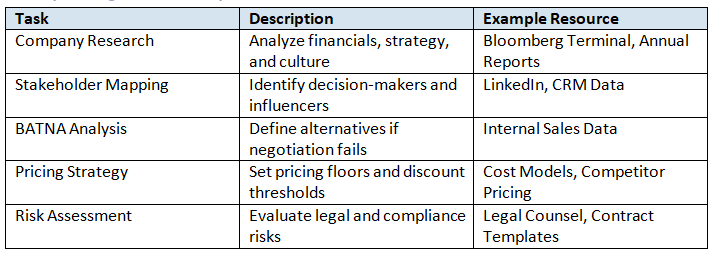
Preparation is the cornerstone of successful negotiations with large corporations. It involves comprehensive research, setting clear objectives, and developing a negotiation plan that incorporates alternative scenarios.
Gather intelligence on the corporation’s financial health, strategic priorities, procurement policies, and recent vendor partnerships. Public filings, industry reports, and LinkedIn insights can reveal vital information about decision-makers and company culture. For example, knowing that a company is pursuing sustainability goals can help you position your product as an eco-friendly solution.
Establish your ideal outcomes, acceptable concessions, and most importantly, your BATNA (Best Alternative to a Negotiated Agreement). Understanding your BATNA empowers you to walk away confidently if terms do not meet minimum profitability or strategic thresholds. For instance, a software provider determined that their BATNA was to focus on mid-market clients rather than discounting heavily for an enterprise deal with unfavorable terms.
Identify all key players—procurement officers, technical evaluators, finance approvers—and understand their influence and interests. Tools like stakeholder matrices can help visualize power dynamics and tailor communication strategies accordingly.
Outline key messages, pricing scenarios, concessions you are willing to make, and contingency plans. A well-documented playbook ensures consistency across your negotiation team and prepares you to respond quickly to unexpected developments.
Sample Negotiation Preparation Checklist
Essential Negotiation Frameworks and Techniques
Leveraging proven negotiation frameworks and psychological techniques significantly enhances your position in complex corporate deals.
BATNA (Best Alternative to a Negotiated Agreement) is your fallback plan, while ZOPA (Zone of Possible Agreement) defines the overlap between buyer and seller acceptable terms. Ensuring your offer falls within the ZOPA is critical to reaching a deal. For example, a supplier calculated the ZOPA by analyzing the buyer’s budget constraints and their own minimum margin, enabling them to make offers that were attractive yet profitable.
Anchoring is the cognitive bias where the first number put on the table influences the negotiation range. Leading with a strong anchor—such as a well-justified price or contract term—can shape buyer expectations. A consulting firm once anchored a renewal contract by presenting a comprehensive value ROI report upfront, setting a high but justified price point that anchored subsequent discussions.
This method emphasizes separating people from the problem, focusing on interests rather than positions, generating options for mutual gain, and insisting on objective criteria. Applying principled negotiation helps maintain positive relationships during tough talks with corporate buyers.
Large corporate contracts often involve multiple issues: price, delivery schedules, service levels, penalties, etc. Bundling these issues and trading concessions across them allows for creative solutions that satisfy both parties. For example, a vendor may accept longer payment terms in exchange for a higher volume commitment from the corporate buyer.
Sample Negotiation Script Using Anchoring and BATNA
Supplier: “Based on our detailed analysis and the value we bring, our initial proposal is $1.2 million for the annual license. We recognize this is a significant investment, but it reflects the comprehensive service and support included.”
Buyer: “That is above our expected budget.”
Supplier: “We understand budget constraints; however, considering your current costs and the ROI our solution delivers, this pricing is competitive. Of course, if this doesn’t align with your expectations, we have alternative packages that might better fit your needs.” (This signals flexibility and introduces BATNA).
Communication and Psychological Tactics in Corporate Negotiations
Effective communication is not just about what you say but how you say it. Psychological principles underpin many successful negotiation tactics.
Establishing a genuine connection with corporate buyers reduces adversarial perceptions. Techniques include mirroring body language, active listening, and demonstrating empathy for their challenges. For example, a supplier who shared relevant case studies and acknowledged the buyer’s pain points built credibility, speeding up consensus.
How information is presented significantly impacts perception. Framing your offer in terms of benefits, cost savings, or risk mitigation can shift buyer focus. Reframing objections as opportunities to explore alternatives helps maintain dialogue momentum.
Strategic use of silence after making an offer or counteroffer can pressure buyers to fill the gap, often revealing concessions or additional information.
Offering limited, conditional concessions encourages reciprocity. For instance, “If you can agree to a two-year contract term, we can offer a 5% discount.” This tactic leverages the social norm of returning favors, increasing the likelihood of agreement.
Psychological Traps to Avoid
· Overcommitting early without assessing buyer flexibility
· Ignoring non-verbal cues during video or in-person meetings
· Failing to manage emotions, leading to reactive responses
· Disclosing your BATNA too soon, weakening your leverage
Handling Common Challenges and Objections
Negotiations with large corporations often encounter typical roadblocks such as price pushback, procurement delays, and legal hurdles.
When buyers cite budget limitations, use value-based selling to reinforce your solution’s ROI. Share quantitative data and testimonials that demonstrate cost savings or revenue uplift. Employ “if-then” trade-offs to explore alternative deal structures without reducing unit price unnecessarily.
Long approval cycles and multiple gatekeepers can stall progress. Build relationships beyond procurement—engage end-users and department heads to advocate internally. Request clear timelines and escalation procedures early on to manage expectations.
Large corporations insist on robust contract terms to mitigate risks. Work closely with legal experts to anticipate compliance requirements and propose acceptable language. Demonstrating flexibility on non-critical clauses can foster goodwill while protecting your core interests.
Large buyers may struggle with internal alignment across departments. Offer to facilitate joint workshops or demonstrations to build consensus and address concerns collectively.
Example: Overcoming a Price Objection
Buyer: “Your price exceeds our budget by 15%.”
Supplier: “Understood. Could you share your key budget constraints? We might explore alternative configurations or phased implementations that maintain core benefits while aligning with your financial parameters.”
Buyer: “We need to stay within $850,000 annually.”
Supplier: “If we extend the contract term to three years, we can offer a 10% discount, which brings the average cost closer to your target while ensuring continued service excellence.”
Measuring Success and Building Long-Term Partnerships
Negotiation success is not only about closing a deal but also setting the foundation for ongoing collaboration.
Track metrics such as contract value, margin achieved, negotiation cycle time, concession levels, and client satisfaction scores. These indicators provide insights into negotiation effectiveness and areas for improvement.
Maintain communication with key stakeholders, deliver on promises, and proactively address issues. This builds trust and positions you favorably for renewals or upsell opportunities.
Conduct post-mortem analyses after each negotiation to capture lessons learned. Incorporate feedback into training programs and update negotiation playbooks accordingly.
· Best Practices for Long-Term Corporate Relationships
· Deliver consistent value beyond contract terms
· Stay informed about corporate changes and strategic shifts
· Engage in regular business reviews and feedback sessions
· Adapt offerings to evolving client needs
Frequently Asked Questions
1. How can small suppliers compete against larger firms when negotiating with big corporations?
Small suppliers can differentiate by emphasizing agility, personalized service, niche expertise, or innovative solutions. Demonstrating clear ROI and reliability helps build credibility. Additionally, leveraging frameworks like BATNA ensures you do not concede too much just to win the deal.
2. What role does corporate culture play in negotiations?
Corporate culture influences decision-making style, risk tolerance, and communication preferences. For example, a highly hierarchical company may require formal proposals and multiple approvals, whereas a more entrepreneurial firm might prefer direct conversations and flexible terms. Adapting your approach to cultural cues improves engagement.
3. How should I handle negotiations when multiple vendors are involved?
Understand that corporations often pit vendors against each other to drive down costs. Focus on demonstrating unique value propositions and building relationships beyond price. Use multi-issue negotiation to offer custom bundles or service enhancements that competitors may overlook.
4. When is it appropriate to walk away from a negotiation?
Walking away is appropriate when the deal terms fall outside your BATNA, when the buyer demands unreasonable concessions, or when risks outweigh potential rewards. Maintaining a strong BATNA provides the confidence to disengage and pursue alternative opportunities.
5. How can technology support negotiation processes?
CRM systems track communication and negotiations history, contract management software streamlines document workflows, and data analytics provide insights into pricing trends and buyer behavior. Virtual meeting platforms facilitate remote negotiations with global stakeholders efficiently.
Conclusion
Negotiating with large corporations requires a strategic blend of preparation, negotiation expertise, and interpersonal skills to navigate complex buying processes and diverse stakeholder interests. By applying structured frameworks like BATNA and principled negotiation, leveraging psychological insights, and anticipating common challenges, vendors can secure agreements that deliver value for both parties.
Remember, success in corporate negotiations extends beyond closing deals—it involves building long-term partnerships founded on trust, mutual benefit, and continuous engagement. Equip your team with the tools and knowledge in this guide to confidently approach your next large enterprise negotiation and turn opportunities into profitable, sustainable business relationships.