Negotiation Skills for Sales Professionals

In today’s hyper-competitive business environment, negotiation skills are an indispensable asset for sales professionals. Every deal, from initial prospecting to closing agreements, hinges on the ability to negotiate effectively. Salespeople who master negotiation not only secure better terms but also build lasting client relationships and drive sustainable revenue growth. With buyers becoming increasingly informed and discerning, traditional sales tactics fall short—negotiation skills bridge this gap by fostering mutual value creation and trust.
This comprehensive guide will equip you with advanced negotiation techniques backed by research in psychology and organizational behavior. You will learn how to apply frameworks like BATNA (Best Alternative to a Negotiated Agreement), anchoring, and active listening to real-world sales scenarios. Practical exercises and scripts will enable you to refine your approach, overcome objections, and close deals confidently. Whether you’re a seasoned sales rep or a new professional, mastering these skills will elevate your performance and career trajectory.
· Table of Contents
· Understanding the Psychology of Negotiation in Sales
· Essential Negotiation Frameworks for Sales Success
· Advanced Communication Techniques: Active Listening and Mirroring
· Leveraging BATNA and Anchoring in Sales Negotiations
· Practical Exercises and Scripts to Sharpen Your Negotiation Skills
· Overcoming Common Challenges in Sales Negotiations
· Frequently Asked Questions
· Conclusion
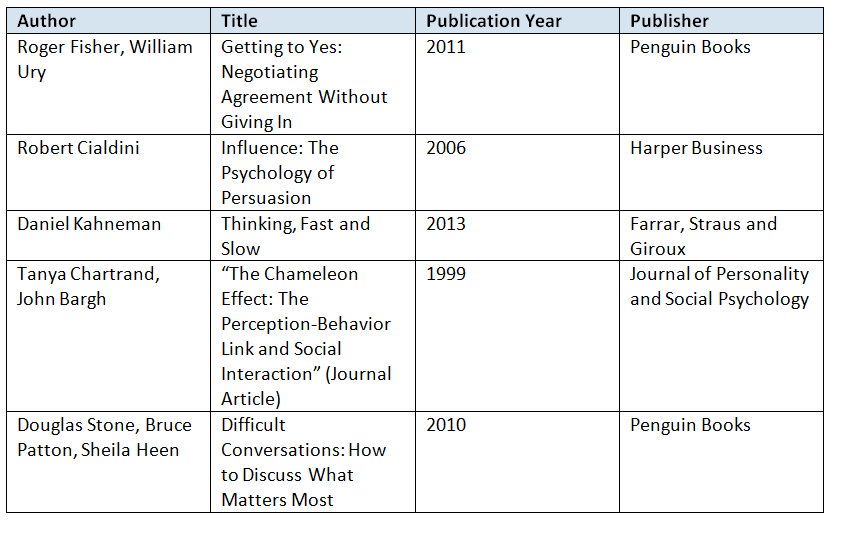
· References
Understanding the Psychology of Negotiation in Sales
Negotiation is fundamentally a psychological process where influence, persuasion, and decision-making converge. For sales professionals, understanding how buyers think and what motivates their decisions is crucial. The dual-process theory of cognition—System 1 (fast, intuitive thinking) and System 2 (slow, analytical thinking)—explains how buyers often rely on quick heuristics but also engage in deliberate evaluation for significant purchases. Skilled negotiators tailor their approach to engage both systems effectively.
One essential psychological principle is the concept of reciprocity, identified by social psychologist Robert Cialdini. When a salesperson offers something valuable early in the interaction—whether information, small concessions, or personalized attention—buyers feel a subconscious obligation to reciprocate, often by making concessions themselves or advancing the deal. Another key factor is trust-building through transparency and empathy. The Harvard Negotiation Project emphasizes the importance of separating people from the problem, focusing on interests rather than positions. This mindset shifts interactions from adversarial to collaborative, yielding better outcomes.
Real-World Example: The Consultative Sales Approach
Consider a sales representative for a SaaS company who begins negotiations by thoroughly understanding the prospect’s business challenges. Instead of pushing a fixed product pitch, the rep listens actively, asks open-ended questions, and proposes tailored solutions. This approach leverages empathy and the psychological principle of validation, making the buyer feel understood and respected. Consequently, the buyer is more open to discussing price and contract terms, facilitating a negotiation centered on mutual benefit rather than price haggling.
Essential Negotiation Frameworks for Sales Success
Several structured frameworks provide a roadmap for successful sales negotiations. Among the most influential is the concept of BATNA, introduced by negotiation scholars Roger Fisher and William Ury in their seminal book "Getting to Yes." BATNA represents your fallback option if negotiations fail, giving you leverage and confidence. For sales professionals, clearly identifying your BATNA—such as alternative prospects or different deal terms—prevents desperation and poor concessions.
Another critical framework is Fisher and Ury’s principled negotiation, which involves four key elements:
· Separate the people from the problem
· Focus on interests, not positions
· Generate a variety of options before deciding
· Insist on objective criteria
Applying these principles helps salespeople avoid common pitfalls like positional bargaining, where parties stubbornly cling to fixed demands, leading to impasse or suboptimal deals.
Framework Application: Multi-Issue Negotiation Matrix
Sales negotiations often involve multiple issues beyond price, such as delivery timelines, payment terms, and service levels. Using a negotiation matrix helps visualize trade-offs and identify win-win solutions.
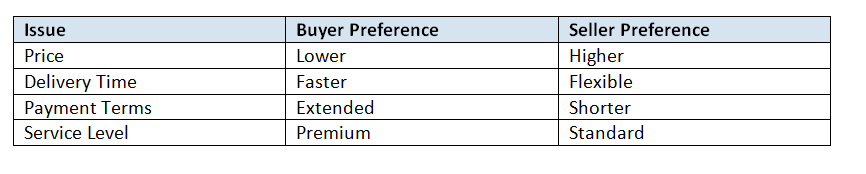
By mapping preferences, sales professionals can propose trade-offs—for example, offering faster delivery in exchange for higher price or shorter payment terms for premium service—thereby expanding the negotiation zone.
Advanced Communication Techniques: Active Listening and Mirroring
Communication is the vehicle of negotiation, and mastering advanced communication techniques can dramatically improve sales outcomes. Active listening, a cornerstone of effective negotiation, involves fully concentrating, understanding, and responding thoughtfully to the buyer’s messages. Research in communication psychology shows that active listening increases rapport, reduces conflict, and uncovers hidden interests.
Techniques to practice active listening include:
· Paraphrasing: Restate the buyer’s points to confirm understanding.
· Summarizing: Condense key points to ensure clarity.
· Asking clarifying questions: Probe deeper into motivations and constraints.
Mirroring is another powerful tool derived from social psychology, where the salesperson subtly imitates the buyer’s body language, tone, or speech patterns. This nonverbal mimicry fosters subconscious rapport and trust. Studies by psychologist Tanya Chartrand reveal that mirroring activates empathy and increases likability, making counterparts more cooperative.
Practical Exercise: Active Listening Role-Play
Partner with a colleague and take turns playing the salesperson and buyer. The salesperson practices active listening by paraphrasing and asking clarifying questions after every buyer statement. Debrief to identify missed cues and areas to improve. This exercise builds awareness of listening habits and enhances responsiveness during real negotiations.
Leveraging BATNA and Anchoring in Sales Negotiations
Two negotiation concepts critical for sales professionals are BATNA and anchoring. BATNA, as introduced earlier, provides a baseline that protects you from accepting unfavorable deals. A strong BATNA strengthens your bargaining power by demonstrating alternatives.
Anchoring, a cognitive bias first described by Tversky and Kahneman, refers to the human tendency to rely heavily on the first piece of information offered when making decisions. In sales negotiations, the initial price or offer serves as an anchor that influences the entire negotiation range.
· Effective anchoring strategies:
· Set the initial offer deliberately high if you are the seller to establish a favorable reference point.
· Use data and objective criteria to justify your anchor.
· Be prepared to counter-anchor if the buyer opens with an unreasonably low offer.
Example Script Incorporating BATNA and Anchoring
Salesperson: "Based on our analysis and market benchmarks, our solution’s value justifies an investment of $15,000 per year. We understand budget constraints, but this reflects the ROI you’ll gain through efficiency improvements. If this doesn’t align with your expectations, we can explore alternate configurations or timelines, but our current clients typically invest within this range."
This script sets a strong anchor ($15,000), references objective criteria (market benchmarks and ROI), and subtly communicates the salesperson’s BATNA (alternative configurations), increasing negotiation leverage.
Practical Exercises and Scripts to Sharpen Your Negotiation Skills
Skill-building through deliberate practice is essential for mastering negotiation. Below are practical exercises and scripts designed to develop key competencies:
· Role-Playing Complex Scenarios: Simulate negotiations involving price, delivery, and service terms. Practice making concessions strategically and using principled negotiation techniques.
· BATNA Identification Worksheet: List all alternatives and evaluate their value to clarify your walk-away point.
· Anchoring Practice: Experiment with opening offers in mock negotiations to observe their impact on counterpart responses.
· Active Listening Drill: During client calls, consciously paraphrase and summarize buyer concerns at least three times.
· Objection Handling Scripts: Prepare and rehearse responses to common objections such as “price is too high” or “we want a better contract term.” For example:
Buyer: "The price is above our budget."
Salesperson: "I understand budget is a priority. Can you share what your target range looks like? Perhaps we can adjust the scope to better fit your financial goals without compromising key benefits."
Overcoming Common Challenges in Sales Negotiations
Negotiations often encounter obstacles such as emotional resistance, power imbalances, and cultural differences. Addressing these challenges requires adaptability and emotional intelligence.
· Managing Emotions: The Thomas-Kilmann Conflict Mode Instrument identifies five conflict-handling styles—competing, collaborating, compromising, avoiding, and accommodating. Sales professionals should aim for collaboration but recognize when compromise is necessary.
· Handling Difficult Buyers: Use the 'Feel-Felt-Found' technique to empathize and reframe objections. For example: "I understand how you feel. Others have felt the same way initially, but they found that our solution saved them significant time and cost."
· Navigating Power Imbalances: Strengthen your position by emphasizing unique value and preparing alternative options (BATNA). Building coalitions within the buyer’s organization can also redistribute power.
· Cross-Cultural Negotiation: Adapt communication style by researching cultural norms. For example, high-context cultures value relationship building before discussing terms, while low-context cultures prioritize directness.
Frequently Asked Questions
1. What is the most important negotiation skill for sales professionals?
The ability to understand and align with the buyer’s interests is paramount. This involves active listening, empathy, and asking insightful questions to uncover underlying needs. Coupled with a clear knowledge of your BATNA and principled negotiation tactics, these skills enable you to create value and close deals effectively.
2. How can I prepare for a difficult sales negotiation?
Preparation involves researching the buyer’s business, industry trends, and pain points. Identify your BATNA and anticipate the buyer’s BATNA. Develop a negotiation plan with clear objectives, fallback positions, and potential concessions. Practicing role-plays and scripting responses to common objections also enhances readiness.
3. How does anchoring affect sales negotiations?
Anchoring sets the initial reference point around which negotiations revolve. A well-placed anchor can influence the buyer’s perception of value and acceptable price range. However, poor anchoring or failure to counter an opponent’s anchor can lead to suboptimal deals.
4. Can emotional intelligence improve negotiation outcomes?
Absolutely. Emotional intelligence allows sales professionals to manage their own emotions, recognize the buyer’s feelings, and respond appropriately. This builds trust, reduces conflict, and facilitates collaborative problem-solving.
5. What role does active listening play in closing sales?
Active listening signals respect and engagement, helping to uncover unspoken objections and motivations. It also fosters rapport, making buyers more receptive to proposals and increasing the likelihood of agreement.
Conclusion
Negotiation skills are a critical differentiator for sales professionals seeking to excel in today’s complex marketplace. By integrating psychological insights, proven frameworks like BATNA and principled negotiation, and advanced communication techniques such as active listening and anchoring, salespeople can create value-driven agreements that satisfy both parties. Consistent practice through exercises and role-plays sharpens these capabilities, enabling confident and effective negotiation.
Investing time and effort into mastering negotiation not only enhances individual performance but also contributes to long-term client relationships and sustainable business growth. Start applying these strategies today to transform your sales conversations and close deals with greater success.