What to Say in a Negotiation: Real Scripts That Work

Negotiation is an art and a science — one that hinges critically on what you say, how you say it, and when you say it. Whether you’re negotiating a salary raise, closing a business deal, or navigating a conflict at work, the words you choose can make the difference between success and failure. Yet many people enter negotiations armed with little more than good intentions and vague hopes, unaware that specific language patterns and carefully crafted scripts can dramatically improve outcomes.
Understanding what to say in a negotiation is essential because words influence perceptions, build rapport, and direct the flow of conversation. This article will equip you with actionable scripts, time-tested techniques, and psychological insights that you can immediately apply to any negotiation scenario. You’ll learn how to frame requests, handle objections, anchor offers, and close deals confidently — all with real-world examples and expert strategies.
· Table of Contents
· Understanding the Psychology Behind Negotiation Language
· Essential Opening Phrases That Set the Tone
· How to Make Offers and Counteroffers Effectively
· Handling Objections: Scripts That Keep You in Control
· Closing the Deal: Words That Seal Agreements
· Negotiation Scripts for Difficult Conversations
· Frequently Asked Questions About Negotiation Language
Understanding the Psychology Behind Negotiation Language
Words are more than mere vehicles for communication; they shape the entire negotiation dynamic. The psychology behind negotiation language involves understanding how framing, tone, and word choice influence your counterpart’s mindset and behavior. Key psychological principles play a pivotal role in what to say during negotiations.
One foundational principle is the **anchoring effect**. When you start with a strong initial offer or position, this figure serves as a cognitive anchor, influencing the range of subsequent counteroffers. For example, opening a salary negotiation with a confident, higher-than-expected number can nudge the final agreement upward. The script might be, “Based on my research and contributions, I believe a salary of $75,000 reflects my value to the company.”
Another critical element is **reciprocity**, which leverages human tendencies to return favors or concessions. Expressing willingness to make concessions can encourage the other party to reciprocate. Saying something like, “If you can accommodate a flexible schedule, I’m willing to consider a slightly lower price,” opens pathways for mutual agreement.
**Framing** also influences perception. Presenting information positively or focusing on benefits rather than costs can shift attitudes. For example, instead of saying, “This package costs $10,000,” say, “This investment will save you $20,000 annually.” This subtle shift directs attention toward value rather than expense.
Understanding these psychological levers helps you choose phrases that not only communicate your position but also subtly guide the negotiation process toward favorable outcomes.
Essential Opening Phrases That Set the Tone
The opening moments of a negotiation are crucial; they establish the atmosphere and lay the groundwork for collaboration or competition. Using the right opening phrases can help you build rapport, demonstrate confidence, and clarify objectives.
Start with a polite but assertive introduction that signals your intent. For example:
· “Thank you for meeting with me today. I’m excited to explore how we can work together to find a solution that benefits us both.”
· “I’ve reviewed the proposal and would like to discuss some areas where we can align better.”
· “Before we begin, I want to ensure we’re both clear on our priorities so we can make the most of our time.”
These phrases demonstrate respect and collaboration while signaling that you are prepared and focused.
The **Mirroring Technique** is a powerful tool during openings. This involves subtly repeating the last few words your counterpart says, encouraging them to elaborate and build rapport. For example, if they say, “We’re looking for a quick turnaround,” you respond, “A quick turnaround?” This encourages them to provide more detail and shows active listening.
Additionally, open-ended questions early on invite dialogue rather than confrontation. Phrases like:
· “Can you tell me more about your key concerns with this proposal?”
· “What are your main objectives for this negotiation?”
These questions create space for understanding and reduce defensiveness, setting a cooperative tone.
How to Make Offers and Counteroffers Effectively
Making offers and counteroffers is the heart of negotiation. The way you phrase these can influence the other party’s willingness to accept or negotiate further.
Start with a well-prepared initial offer that is ambitious yet reasonable, using the **anchoring technique**. For example:
“I appreciate the opportunity to discuss this. Based on my market research and previous results, I propose a rate of $150 per hour.”
When countering an offer, avoid outright rejection or confrontation. Use **conditional counteroffers** that keep the conversation open:
“That’s an interesting offer. If we can adjust the delivery timeline to two weeks, I’d be comfortable agreeing to $140 per hour.”
This phrase uses “if” statements to create a trade-off, encouraging reciprocity.
Another effective tactic is the **"feel-felt-found"** method, which acknowledges the other party’s position empathetically before presenting your counteroffer:
“I understand how you feel about the budget constraints. Others have felt the same initially but found that investing a bit more upfront saved costs long-term.”
This approach uses empathy and social proof to soften resistance.
Remember to maintain a collaborative tone throughout, framing your offers as solutions rather than demands.
Handling Objections: Scripts That Keep You in Control
Objections are natural in every negotiation. How you respond to them can either escalate tension or open doors to agreement.
One of the most effective techniques is **active listening combined with reframing**. When your counterpart raises an objection, acknowledge it and restate it in your own words to demonstrate understanding:
“I hear that the timeline is a concern for you. Can you share more about what specifically makes it challenging?”
This invites deeper dialogue and shows respect for their perspective.
Once you understand the objection, use **problem-solving language** to pivot the conversation:
“Given the timeline constraints, what if we phased the delivery in two stages to meet your deadlines without compromising quality?”
If the objection is about price, use the **"feel-felt-found" technique** again:
“I understand the price feels high. Other clients have felt that at first but found the value in our comprehensive support worth the investment.”
Avoid defensive or confrontational responses like “That’s not true” or “You’re wrong,” which can shut down communication.
Closing the Deal: Words That Seal Agreements
Closing a negotiation requires clear, confident language that moves both parties toward commitment without pressure.
Use **summary and confirmation phrases** to recap agreed points and ensure alignment. For example:
“To summarize, we’ve agreed on a delivery timeline of three weeks and a price of $12,000. Does that sound correct to you?”
This reduces misunderstandings and reinforces progress.
Next, use **assumptive closing** by phrasing next steps as a natural conclusion:
“I’ll prepare the contract with these terms and send it over by tomorrow for your review.”
This assumes agreement without pushing aggressively.
Alternatively, try the **“alternative choice close,”** which offers limited options to guide decision-making:
“Would you prefer to start the project on Monday or Wednesday?”
This technique prevents a simple yes/no stalemate and encourages action.
Avoid last-minute surprises or introducing new terms during the close, which can erode trust.
Negotiation Scripts for Difficult Conversations
Difficult negotiations—such as those involving conflict, high stakes, or emotional topics—require heightened sensitivity and strategic language.
Start by **acknowledging emotions** to defuse tension:
“I realize this is an important issue and may feel frustrating. I want us to find a solution that respects both our needs.”
Using **I-statements** rather than accusatory language helps maintain respect:
“I feel concerned when deadlines are missed because it impacts the overall project.”
Instead of “You never meet deadlines,” which triggers defensiveness.
When the conversation stalls, use the **“broken record” technique**, calmly repeating your main point without escalation:
“I understand your position. My priority is to ensure quality delivery on time.”
This persistence demonstrates firmness without hostility.
For highly emotional negotiations, incorporating **neutral pauses** and asking for breaks can help:
“Let’s take a short break and revisit this with fresh perspectives.”
This prevents impulsive reactions and allows for regrouping.
Frequently Asked Questions About Negotiation Language
1. What are some universally effective phrases to start any negotiation?
Universal openers include expressions of appreciation, invitations for collaboration, and open-ended questions. For example, “Thank you for taking the time to meet. I’m looking forward to finding a solution that works for both of us,” sets a positive tone. Open-ended questions like, “What are your main priorities?” encourage dialogue.
2. How can I respond if the other party uses aggressive language?
Maintain calm and avoid mirroring aggression. Use neutral, non-confrontational phrases such as, “I want to understand your concerns better,” or “Let’s focus on solutions that meet both our needs.” This de-escalates tension and shifts the conversation to problem-solving.
3. Is it okay to pause during a negotiation before responding?
Yes. Strategic silences or pauses allow you to process information, demonstrate thoughtfulness, and can encourage the other party to fill the gap, sometimes revealing additional information. Saying, “Let me think about that for a moment,” is perfectly acceptable.
4. How do I handle a “no” without damaging the negotiation?
View “no” as a starting point, not an endpoint. Respond with curiosity by asking, “Can you help me understand your concerns?” or “What would make this more acceptable to you?” This keeps the dialogue open and shows willingness to find alternatives.
5. Should I reveal my bottom line during negotiations?
Typically, it’s best to keep your bottom line confidential to preserve leverage. Instead, focus on interests and priorities. If pressed, you can say, “I’m looking for a fair outcome that reflects the value brought to the table,” without disclosing exact limits.
Conclusion
Mastering what to say in a negotiation requires more than just good intentions; it demands strategic language, psychological insight, and practiced scripts to guide conversations toward win-win outcomes. By applying the techniques outlined here — from powerful opening phrases to effective objection handling and closing scripts — you can increase your negotiation confidence and success rate in any scenario.
Remember, negotiation is a dynamic process that thrives on preparation, active listening, and adaptability. Begin incorporating these real scripts and principles in your next negotiation to see tangible improvements. For further enhancement, consider role-playing these scripts or recording your practice sessions to refine tone and timing. Start honing your negotiation language today and unlock better deals, stronger relationships, and greater professional achievements.
References
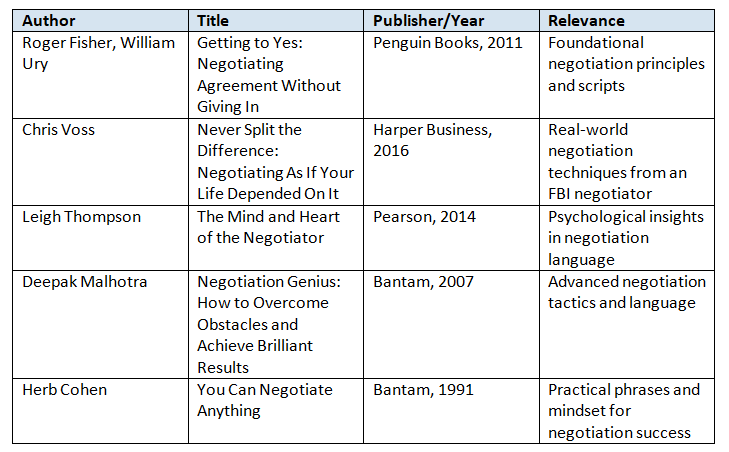
Mastering how to negotiate is not about tricks — it's about clarity, positioning, and control. If you want to go deeper into advanced negotiation strategies, negotiation psychology, handling objections, and negotiating under pressure, explore our full library of articles designed for professionals operating in high-stakes business environments.